The Living Gene Bank - Nellachan Cheruvayal Raman (1952 – 14, Oct, 2026)
Article Document Attachment
Read or store the DOCX version of this article
When Padmashri Cheruvayal K. Raman passed away at the age of 74 on October 14th 2026, the agrarian world lost far more than a celebrated Padma Shri recipient. It lost a living bridge between ancestral indigenous knowledge and ecological survival. Affectionately known as "Ramettan" and revered locally as Nellachan (the father of paddy seeds), Raman spent decades transforming his ancestral plot at Kammana, near Mananthavady in Kerala’s Wayanad district, into a living sanctuary for indigenous rice diversity.
The Living Gene Bank - Nellachan Cheruvayal Raman (1952 – 14, Oct, 2026)
Ram Kamal
When Padmashri Cheruvayal K. Raman passed away at the age of 74 on October 14th 2026, the agrarian world lost far more than a celebrated Padma Shri recipient. It lost a living bridge between ancestral indigenous knowledge and ecological survival. Affectionately known as "Ramettan" and revered locally as Nellachan (the father of paddy seeds), Raman spent decades transforming his ancestral plot at Kammana, near Mananthavady in Kerala’s Wayanad district, into a living sanctuary for indigenous rice diversity.
At a time when modern agribusiness turned seeds into proprietary, hybrid, and genetically modified commodities, Raman embodied a quiet yet revolutionary philosophy: seeds do not belong to commerce; they belong to nature and community.
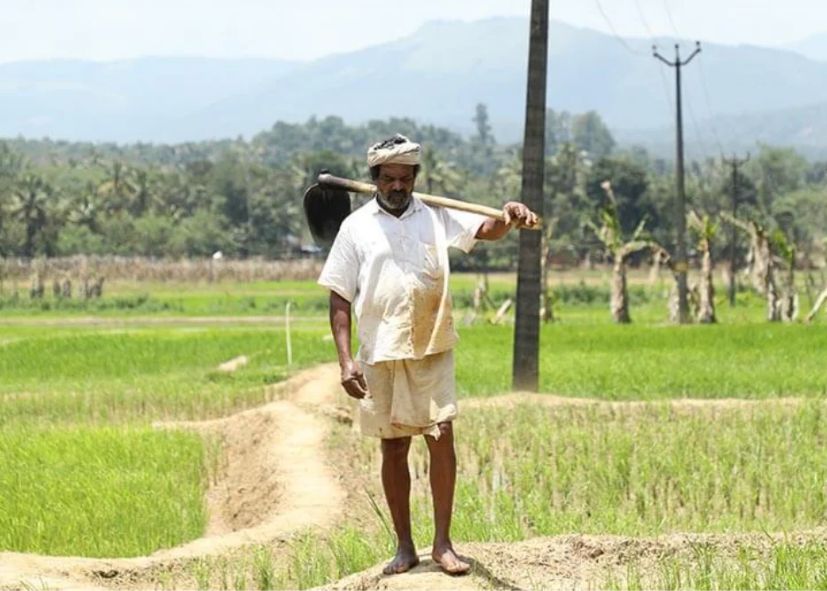
Pic credit: Anvar. Photo caption: Cheruvayal Raman protector of 45 traditional rice varieties at his 150 year old traditional tribal home, where he store seeds and distribute free
Belonging to the Kurichya tribal community, famed across the Malabar region for their deep mastery of paddy cultivation, Raman assumed stewardship of his family's agrarian inheritance at just 17 years of age following the death of his maternal uncle. Along with ancestral farmland, he received a handful of traditional rice varieties.
The turning point that transformed Raman from a local cultivator into a dedicated conservationist came around the 1980s. A group of visiting student researchers arrived in Wayanad seeking obsolete, historic agricultural tools and storing baskets and pots. When Raman asked why they were gathering discarded equipment, they replied that these relics needed to be preserved so future generations could learn from them.
The realization struck him deeply, if farming implements could vanish into history, would not the ancient seeds disappear as well? Raman decided that conserving indigenous seeds before they slipped into extinction was an inescapable duty.
The Lone Gene Bank: Resistance Against the Green Revolution
The backdrop of Raman’s mission was the aggressive expansion of the Green Revolution. From the late 1960s onward, high-yielding varieties (HYVs) and chemical fertilizers swept through Indian agriculture. Wayanad, which historically boasted roughly 160 indigenous rice varieties, saw vast swathes of paddy fields converted to commercial cash crops like pepper, ginger, and areca nut, or abandoned to chemical degradation.
As other farmers chased rapid yields, Raman walked through Wayanad searching for vanishing landraces. Many mocked him, dismissing his devotion to low-yielding ancient grains as sheer madness. Yet Raman persisted.
By cultivating distinct varieties in small plots measuring just one to five cents each, he personally conserved over 55 to 63 rare indigenous rice varieties year after year. Because a paddy seed loses its viable spark of life after 10 to 12 months, true preservation cannot happen merely in cold storage, it requires sowing, nurturing, and harvesting the crop every single cycle. Raman’s farm became an invaluable, living gene bank.
One incident of his maternal uncle was an interesting story linked with green revolution of India. Even though the Green Revolution, led by M. S. Swaminathan and his team of agricultural scientists, ended famine and transformed India into a grain exporter capable of feeding the world, the reality was harsh: early chemical fertilizer experiments turned fertile farmland barren after just one or two harvests because the soil lost its vitality.
I still remember this incident from the mid-1970s involving a bank manager in Wayanad and Raman’s uncle Moopan. The government had instructed the bank manager to disburse agricultural loans only to farmers willing to adopt high-yielding seeds and chemical fertilizers to boost productivity with a target. However, Moopan (chieftain) of the Kurichiya tribe stood in his way, staunchly refusing to introduce chemical fertilizers to his community’s paddy fields.
Undeterred, the manager won over a young tribal man by convincing him that these fertilizers would work miracles. After offering him an incentive under the cover of night, the manager, his staff, and the youth slipped into the chieftain’s fields and began applying the chemicals across the paddies.
They were caught red-handed by the chieftain and his clan. The Moopan ordered the manager to take a handful of the chemical fertilizer. Having no other choice, the manager complied.
"Hold it for a minute," the Moopan commanded.
Within moments, the chemical reaction began scorching the manager’s skin. Unable to bear the pain, he dropped the fertilizer and desperately poured water over his palm to soothe the burn.
The Moopan looked at him and said, "This land is my mother. Do you truly believe I would let my mother endure this burning and leave her to die?"
Among the varieties Raman alive inside his 150-year-old traditional mud house were:
- Gandhakasala and Jeerakasala: Celebrated for their fragrant aroma and culinary prestige.
- Chennelu: A deep-red, nutrient-dense grain central to tribal food traditions.
- Veliyan and Palveliyan: Hardy varieties prized for nourishing preparations such as traditional rice gruel (kanji).
- Njavara: Renowned for its therapeutic and Ayurvedic medicinal applications.
- Diverse landraces like Thondi, Chembakam, Kayama, and Kalladiyaran, possessing innate evolutionary traits ranging from drought resistance to flood survival and pest resilience.
Having abandoned synthetic chemical fertilizers as early as 1978 after watching earthworms and microbial life perish in the soil, Raman practiced strict natural farming. His core ethos remained unyielding: "Farming must feed the soil, not kill it."
He is revered with a sacred trust of free exchange over commercial greed for these seeds to other farmers is his philosophy. Central to Raman’s worldview was a non-transactional ethics of biodiversity. He steadfastly refused to sell seeds for cash. When visiting farmers asked for indigenous varieties, Raman offered them freely under a single condition: take a kilogram of seed, sow it, and return the same amount after harvest so another farmer could plant it next season.
To Raman, seeds were not proprietary intellectual property owned by multinational agribusinesses, but sacred gifts carried by wind, rain, and ancestors. Farmers were merely guardians tasked with revitalizing life and handing it across generations. In the current market, these rice families are the premium health brands and cost a minimum of 3 times higher than the new yield rice brands. India and the traditional farming community will ever remember ‘Cheruvayal Raman’ forever.