Watch this featured video post on Instagram.
The One Above the Sky and The Other Below the Ground — Two Disruptive Technologies Part 1 – The One Around Us and Above
A two-part blog on two different networks that meet with new disruptive technologies. The one above as a cable and tower to bring internet and communication and the other is beneath our feet, which runs al across the land mass as Septic Sewage Tanks, which is polluting all our water bodies and making us drink our on human excreta and get into dangerous health calamities. Part 1 is about the new SapceX Starlink.
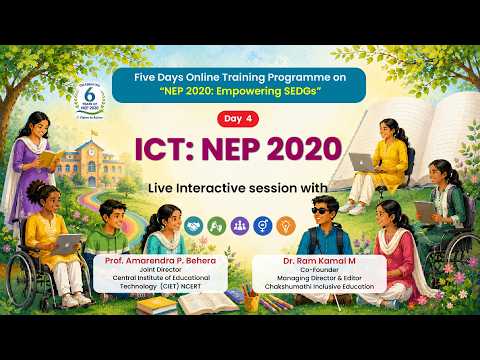
Day 4 :- ICT: NEP 2020
Vlog by Ram Kamal. Watch the featured Google Talk or presentation video.
Romeos juliets and valentines of Andhra
Drawing a parallel to Shakespeare's tragic young lovers, author Ram Kamal highlights a rising school-level romance epidemic in Andhra Pradesh. Driven by unrealistic portrayals in Telugu cinema and a lack of regulation on tobacco and alcohol sales near educational facilities, more than 70% of school students are estimated to be in relationships. Kamal warns of the severe consequences of these distractions, including plummeted academic performance, emotional trauma, family and caste conflicts, and early marriages. To safeguard the state's future development, he calls on parents, teachers, the government, and the cinema industry to intervene with realistic messaging, vigilance, and comprehensive sex and psychological education.
Modi Kalam and Lex
Drawing from reflections on Prime Minister Narendra Modi, former President Dr. A.P.J. Abdul Kalam, and legendary editor Patradhipar Sukumaran, this insightful article explores the profound transformation of modern journalism. Highlighting a groundbreaking, AI-translated podcast between Modi and computer scientist Lex Fridman, the author examines the intersection of emerging technology and journalistic integrity. Ultimately, the piece champions the enduring value of "positive journalism"—advocating for a media landscape that, like honeybees, prioritizes constructive, uplifting narratives and scientific progress over sensationalism and negativity, while still maintaining its vital role in holding power accountable.
Chanting Chandrika and Andhra Child Marriages
In this thought-provoking piece, educator Ram Kamal contrasts the inspiring, barrier-breaking success of global artist Chandrika Tandon with the ongoing crisis of child marriages in Andhra Pradesh. While Chandrika overcame rigid traditional expectations to excel academically and artistically, many brilliant young girls in Andhra today are forced to abandon their education after the 10th grade. Calling on the state government to emulate Kerala’s successful eradication of child marriage through strict law enforcement and public vigilance, Kamal argues that safeguarding girls' education is key to a prosperous society.
When the Music Changes - August 30 2026
When the Music Changes, an independent film directed by and starring Lakshmi Devy, exposes the harsh realities of urban vulnerability and violence against women in modernizing India. The review frames the film as an urgent cautionary tale, emphasizing that families and young women must prioritize situational awareness and personal safety over idealism in urban environments.
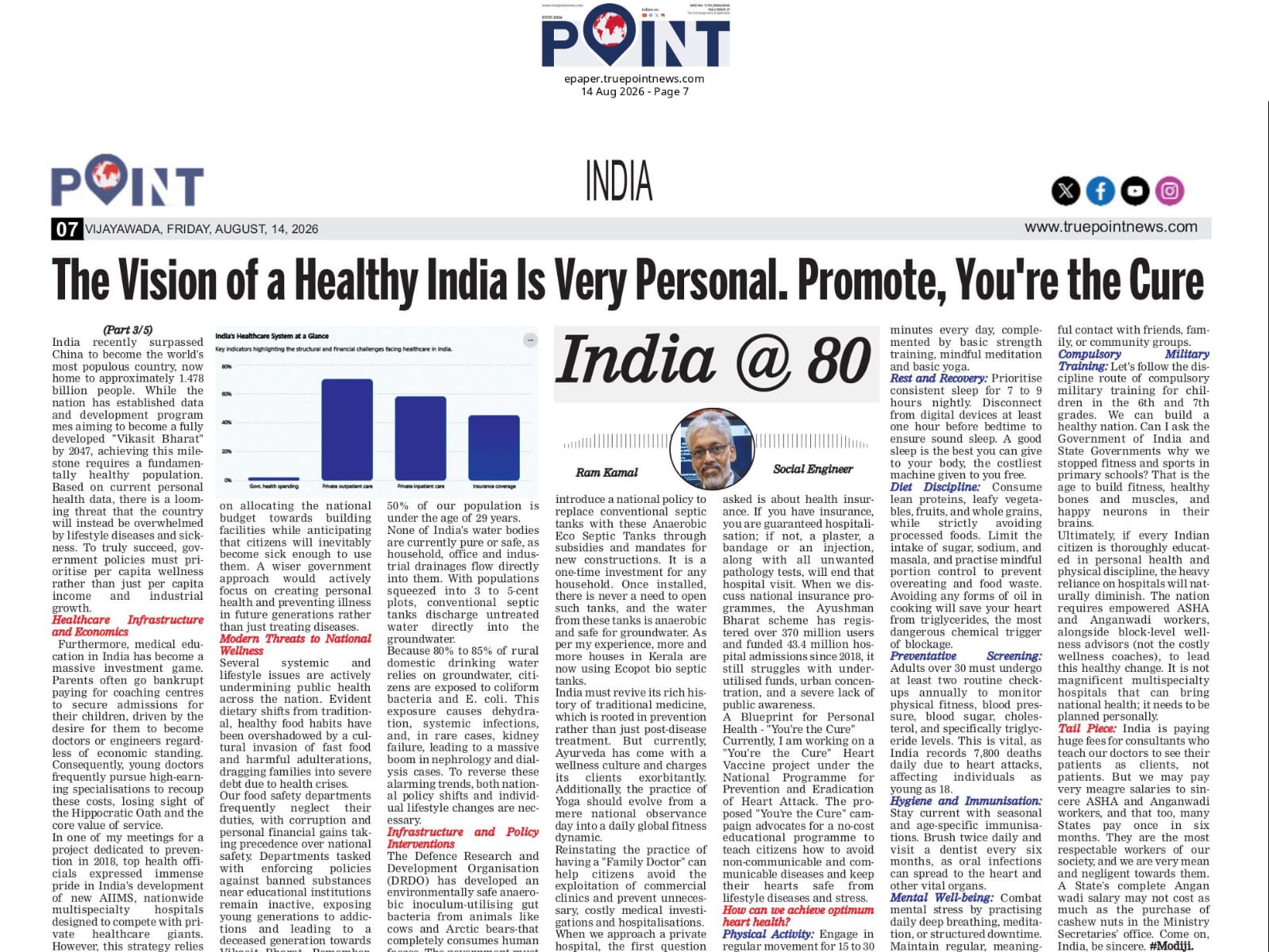
Vision of Healthy India versus Personal Health 14 Aug 2026
This article from True Point News discusses the urgent need to shift India's national healthcare focus from building costly multispecialty hospitals to prioritizing personal wellness and disease prevention. Noting that India has surpassed China in population, the author emphasizes the rising threats of lifestyle diseases, compromised groundwater, poor dietary habits, and systemic failures in food safety. To achieve a truly healthy population by 2047 under the "Vikasit Bharat" vision, the text proposes comprehensive personal health guidelines ("You're the Cure") focusing on physical activity, rest, diet discipline, preventative screening, hygiene, and mental well-being, while critiquing the current over-commercialization of medical education and healthcare.
The World That Can Be Healed and Prosper May 14 2026
In 'The World That Can Be Healed and Prosper,' Ram Kamal examines the stark paradox of 2026, where unprecedented scientific, agricultural, and technological advancements coexist with escalating global conflict and political instability. Despite possessing the tools to eradicate famine and disease, humanity remains crippled by stubborn leadership, religious extremism, and a devastating 'War Economy' that exploits the most vulnerable as political currency. Confronting the tragic realities of warfare—particularly the psychological and physical exploitation of children—Kamal calls for a crucial shift away from failed international bureaucracies toward decentralized peace, the protection of young minds, and an economy rooted in innovation rather than destruction. Ultimately, the article serves as an urgent appeal to choose collective human survival over the destructive egos of the present.
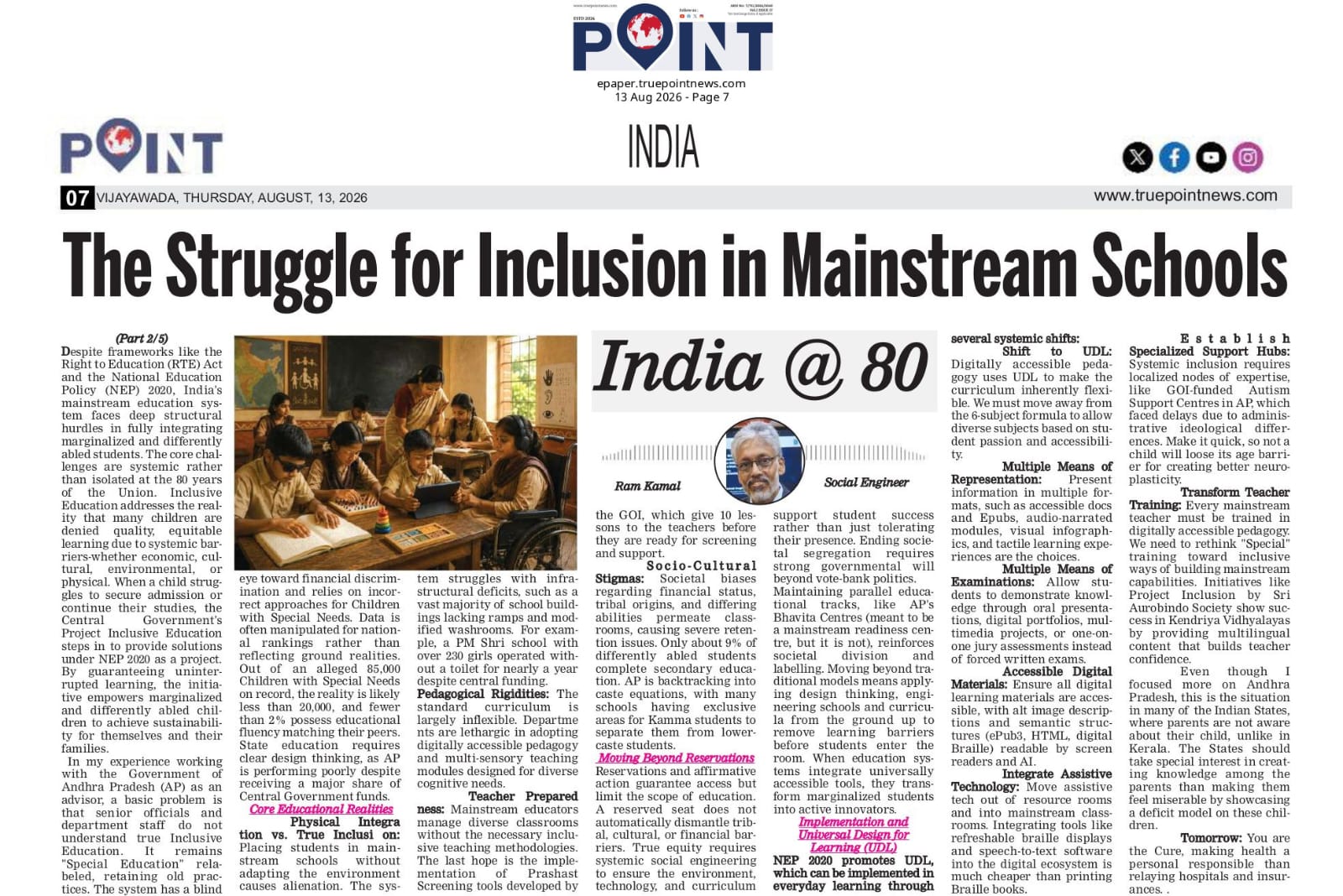
The Strugle of Inclusion in the Mainstream schools 13 Aug 2026
This newspaper article from 'POINT', written by social engineer Ram Kamal, discusses the critical challenges of executing inclusive education in Indian schools under the NEP 2020 framework. Kamal argues that physical integration without infrastructure adaptations and flexible, digitally-accessible curricula alienates differently-abled and marginalized students. Critiquing systemic administrative failures, particularly in Andhra Pradesh, the piece calls for a shift toward Universal Design for Learning (UDL), which incorporates accessible digital materials and assistive tech, while urging a transformation in teacher training and the dismantling of sociocultural stigmas.
The Rail Trap May 2 2026
In "The Rail Trap: A Study into the Transformation of Indian Railways," Ram Kamal analyzes the high-stakes balancing act between the rapid, green modernization of India's railway network and its deep structural financial struggles. While physical upgrades like Dedicated Freight Corridors, near-total electrification, and indigenous Vande Bharat trains mark a massive technological leap, the system remains financially strained by high operating ratios and politically motivated passenger subsidies. Drawing on European and British privatization experiences, Kamal suggests that introducing private operators could ease demand pressures and improve services, but cautions against rising costs for passengers and unaddressed systemic issues like last-minute ticketing anxiety from waitlisted bookings.
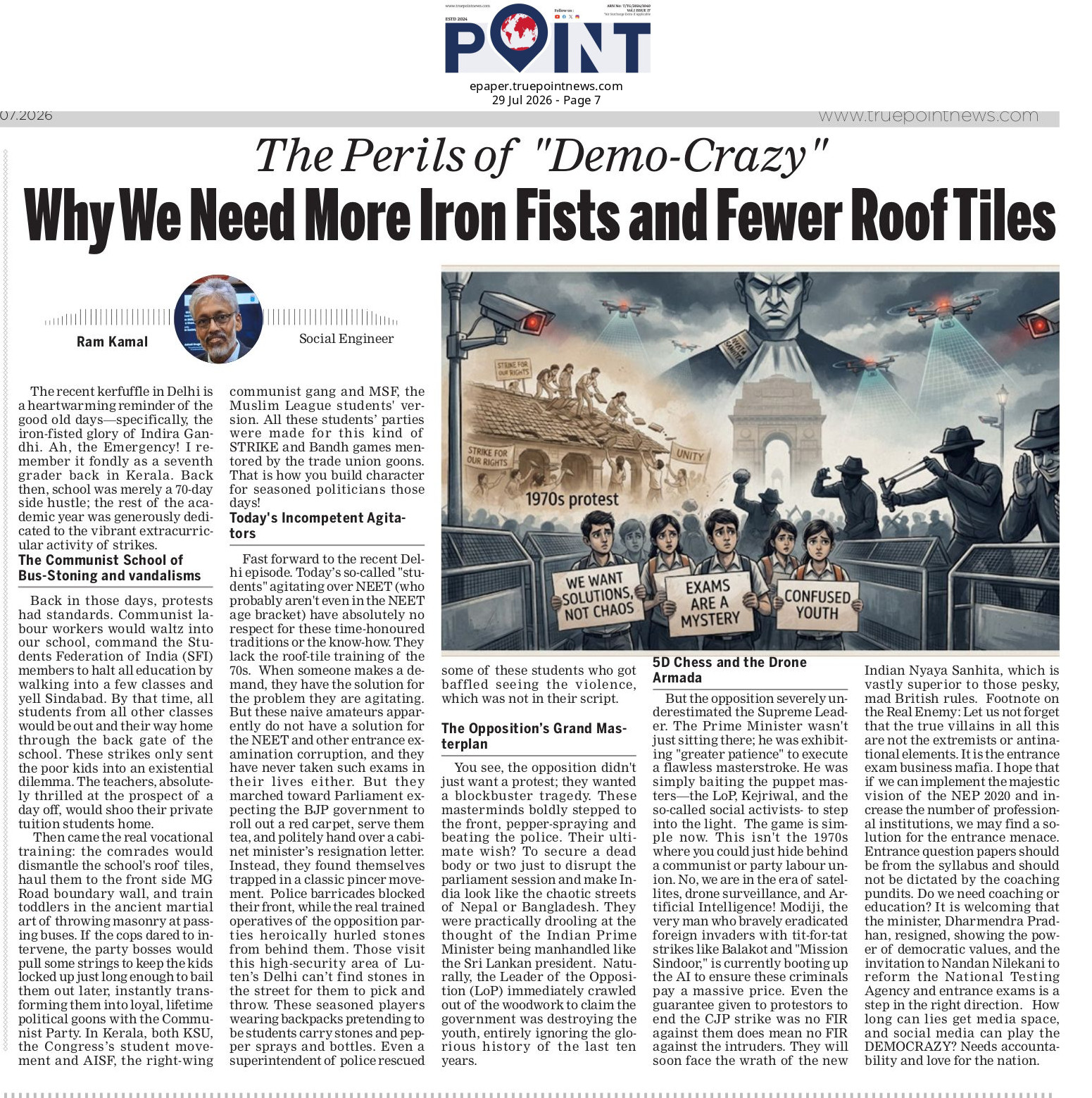
The Perils of Demo-Crazy 29 July 2026
This image features an opinion piece from the e-paper "POINT," written by Social Engineer Ram Kamal. Titled 'The Perils of "Demo-Crazy"', the article satirically compares the systematic, student-led protests of the 1970s to modern-day demonstrations, which the author describes as disorganized and easily manipulated by opposition politicians. A prominent illustration juxtaposes chaotic black-and-white 1970s strikes overseen by Indira Gandhi against modern, color-depicted student protests monitored by high-tech police, drones, and AI under Narendra Modi. The article critiques contemporary agitations, accusing opposition parties of orchestrating unrest, while praising the current administration's control measures.
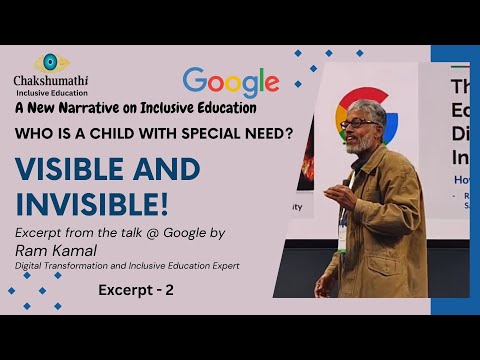
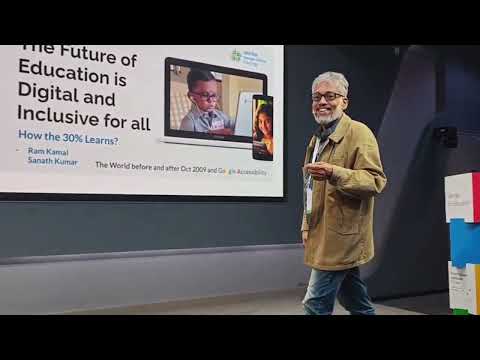
Google Talk by Ram Kamal Part 2. Why Inclusive education is important and how we can realise it.
Vlog by Ram Kamal. Watch the featured Google Talk or presentation video.
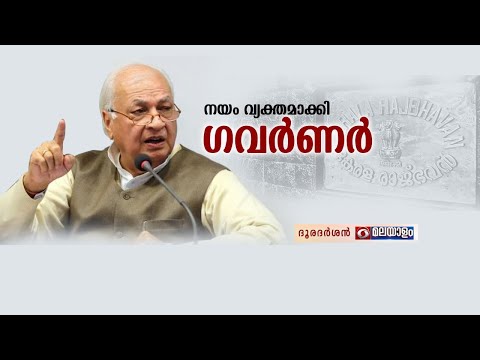
Exclusive Interview with Kerala Governor || നയം വ്യക്തമാക്കി ഗവർണർ |11-11-2022 @ 07:30 pm
Vlog by Ram Kamal. Watch the featured Google Talk or presentation video.
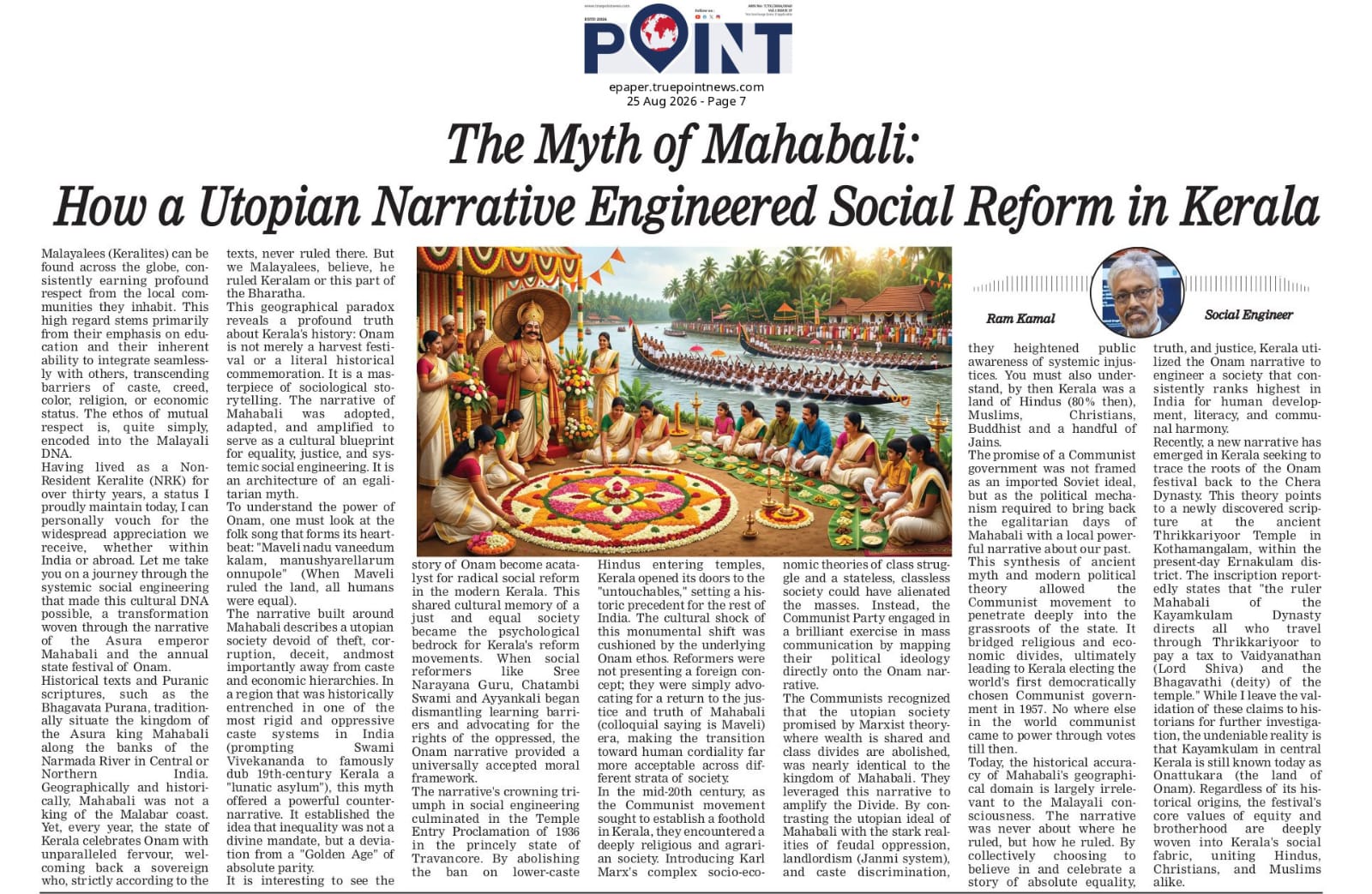
The Myth of Mahabali - How Utopian Narrative engineered social reforms in Kerala 25 August 2026
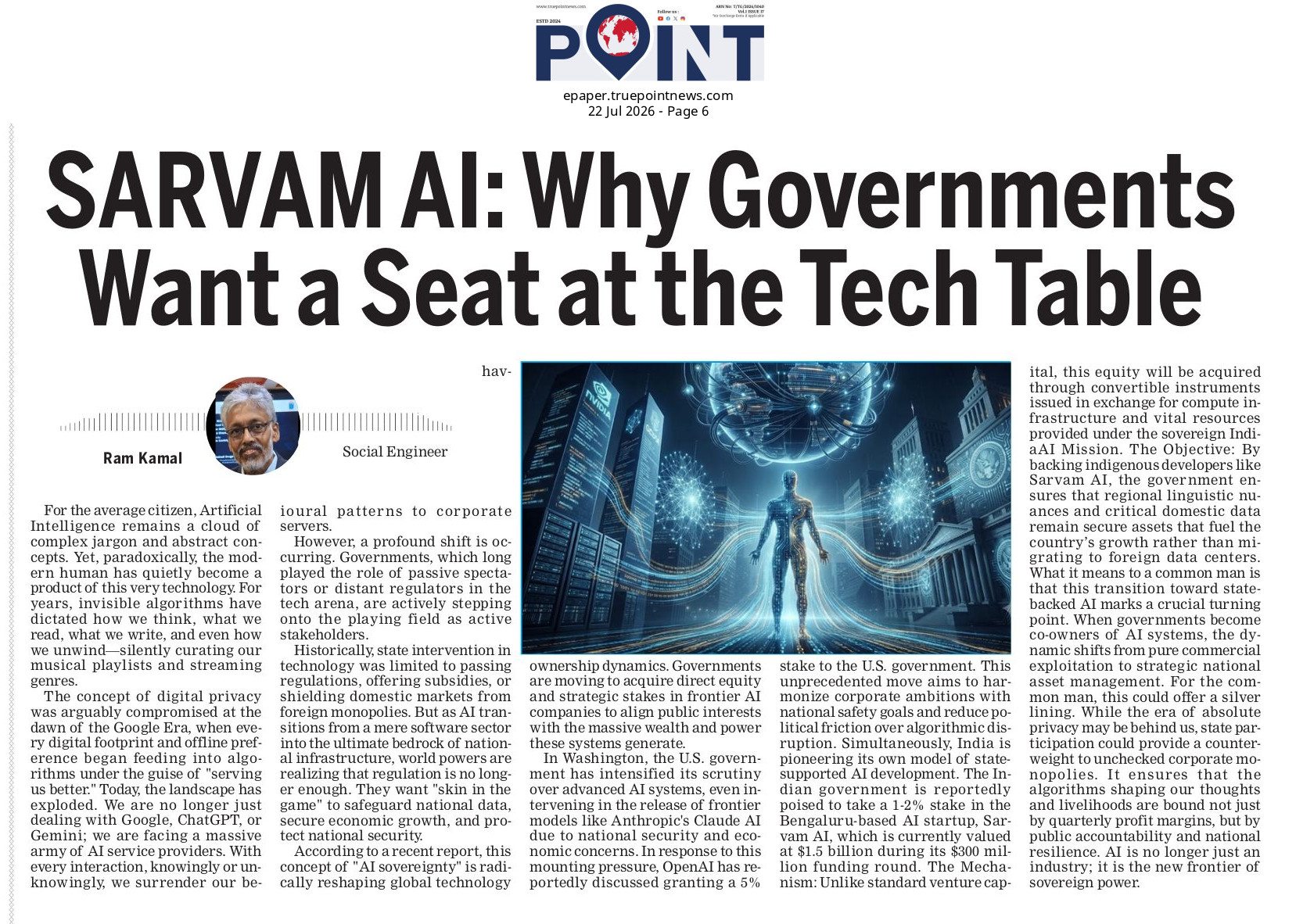
Sarvam AI - Why Governments want a seat at the Tech 22 July 2026
This newspaper article from POINT (July 22, 2026) discusses the rising global phenomenon of "AI sovereignty," where national governments are transitioning from mere regulatory overseers to active stakeholders in Artificial Intelligence companies. Highlighting efforts in both the U.S. (negotiating stakes in OpenAI) and India (acquiring equity in Bengaluru-based Sarvam AI), the author argues that government-backed equity helps protect national security, preserves local linguistic nuances, and prevents essential domestic data from migrating abroad. Moving from passive regulation to active asset ownership is framed as a strategic necessity to counter corporate monopolies and ensure algorithmic development remains accountable to public interests rather than solely corporate margins.
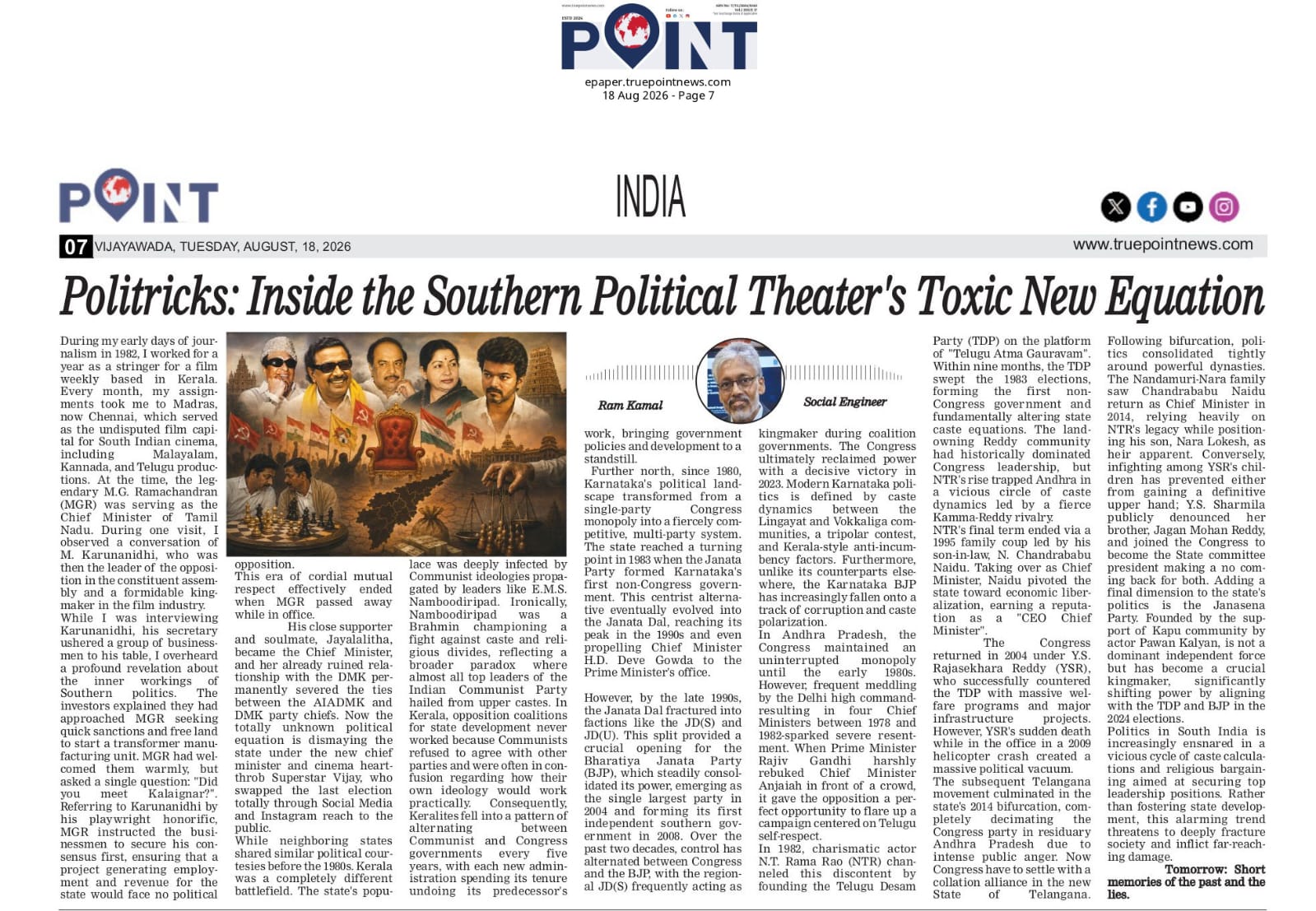
Politricks inside the southern political theatres toxic new equation 18 August 2026
This editorial article from 'POINT' newspaper analyzes the shifting, increasingly complex political dynamics across South India, focusing on Tamil Nadu, Kerala, Karnataka, Andhra Pradesh, and Telangana. Tracing historical trajectories from the early 1980s to the present, the authors illustrate how early eras of mutual respect—such as between MGR and Karunanidhi in Tamil Nadu—have given way to modern social-media campaigns, intense dynastic consolidation, and polarising caste alignments. Highlighting the institutional stalemates in Kerala, tripolar caste-driven contests in Karnataka, and the disruptive post-bifurcation dynastic rivalries in Andhra Pradesh and Telangana, the article concludes that southern politics has become dangerously ensnared in a cycle of caste calculations and power-brokering, threatening regional societal stability and development.
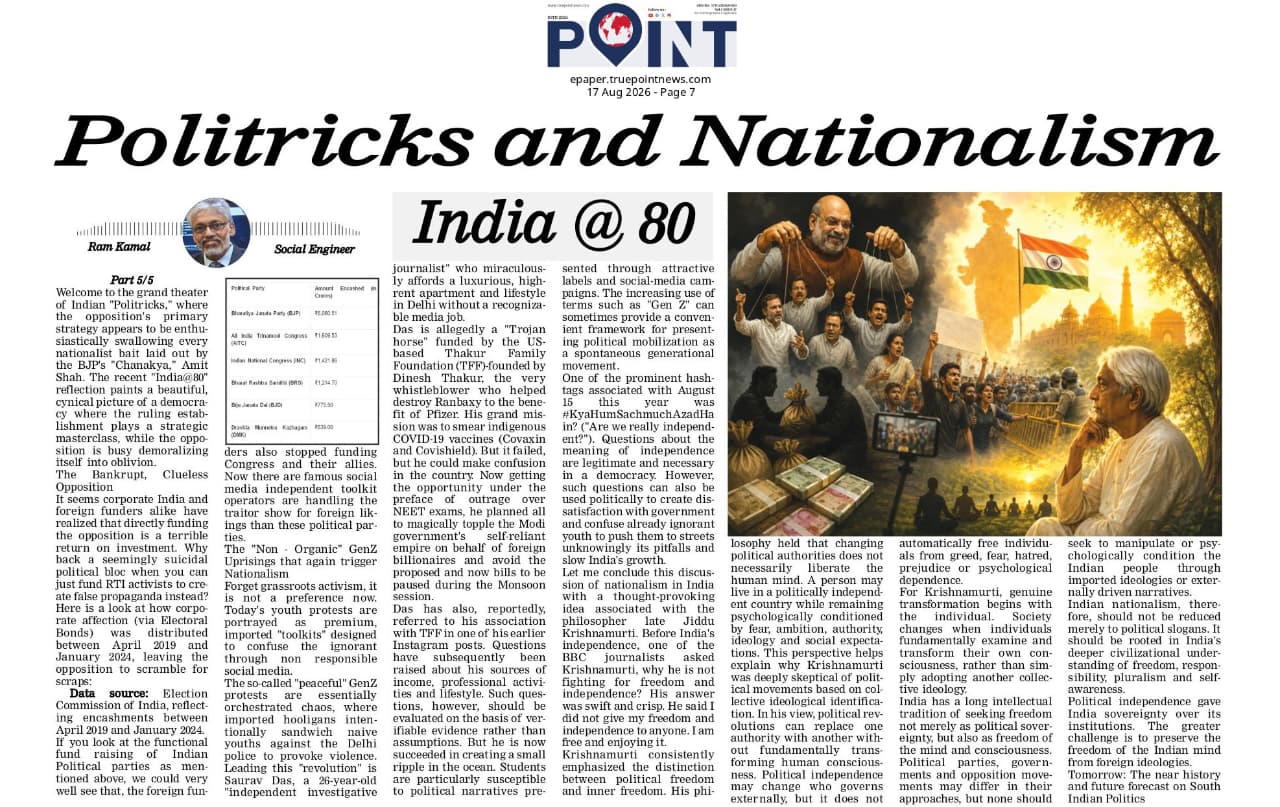
Politricks and Nationalism Aug 17 2026
This editorial article, titled "Politricks and Nationalism: India @ 80" from Point news, critiques the contemporary political landscape in India. It argues that the political opposition has been left underfunded, as evidenced by a table detailing Electoral Bond encashments heavily favoring the ruling BJP. The writer alleges that instead of organic protests, foreign interests and funded "toolkit" operators—specifically mentioning investigative journalist Saurav Das and the US-based Thakur Family Foundation—are orchestrating "Gen Z" uprisings to disrupt India's progress. Concluding with the philosophical insights of Jiddu Krishnamurti, the article stresses that true national independence lies in civilizational self-awareness and inner intellectual freedom rather than merely changing external political authorities.
Paradoxical Reality of Intersex Lives
In "Paradoxical Reality of Intersex Lives," Ram Kamal reflects on the systemic exclusion of trans and intersex individuals, juxtaposing a progressive gender-neutral restroom sign in Amaravati with a painful memory of a young trans woman forced to drop out of school due to basic infrastructural exclusion. Kamal challenges the binary "boy or girl" paradigm, pointing to the high prevalence of intersex traits and criticizing the historical "nurture over nature" medical model that subjected children to secrecy and traumatic corrective surgeries. Ultimately, the piece is a powerful call to action for dignified infrastructure, inclusive education, and the societal acceptance of all human identities as part of nature's diverse design.
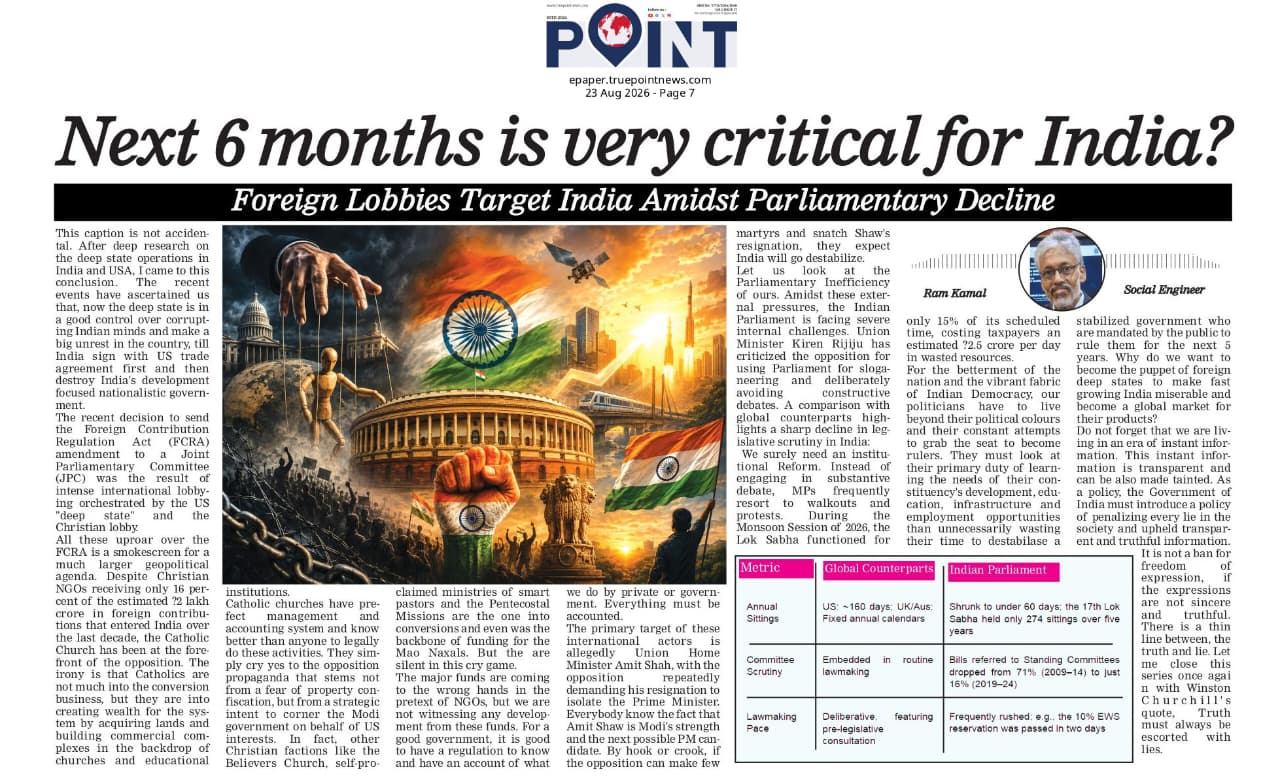
Next 6 months is very critical for India 23 August 2026
This editorial article from 'POINT' argues that India faces an imminent threat from foreign 'deep state' lobbies and local interests attempting to destabilize its nationalistic government over the next six months. Written by social engineer Ram Kamal, the piece alleges that international opposition to the Foreign Contribution Regulation Act (FCRA) is a geopolitical front organized by US lobbies and church groups. It also highlights internal governance concerns, pointing to a severe decline in the productivity and legislative scrutiny of the Indian Parliament, as detailed in a comparative table showing decreased annual sittings, reduced committee scrutiny, and rushed lawmaking processes compared to global counterparts.
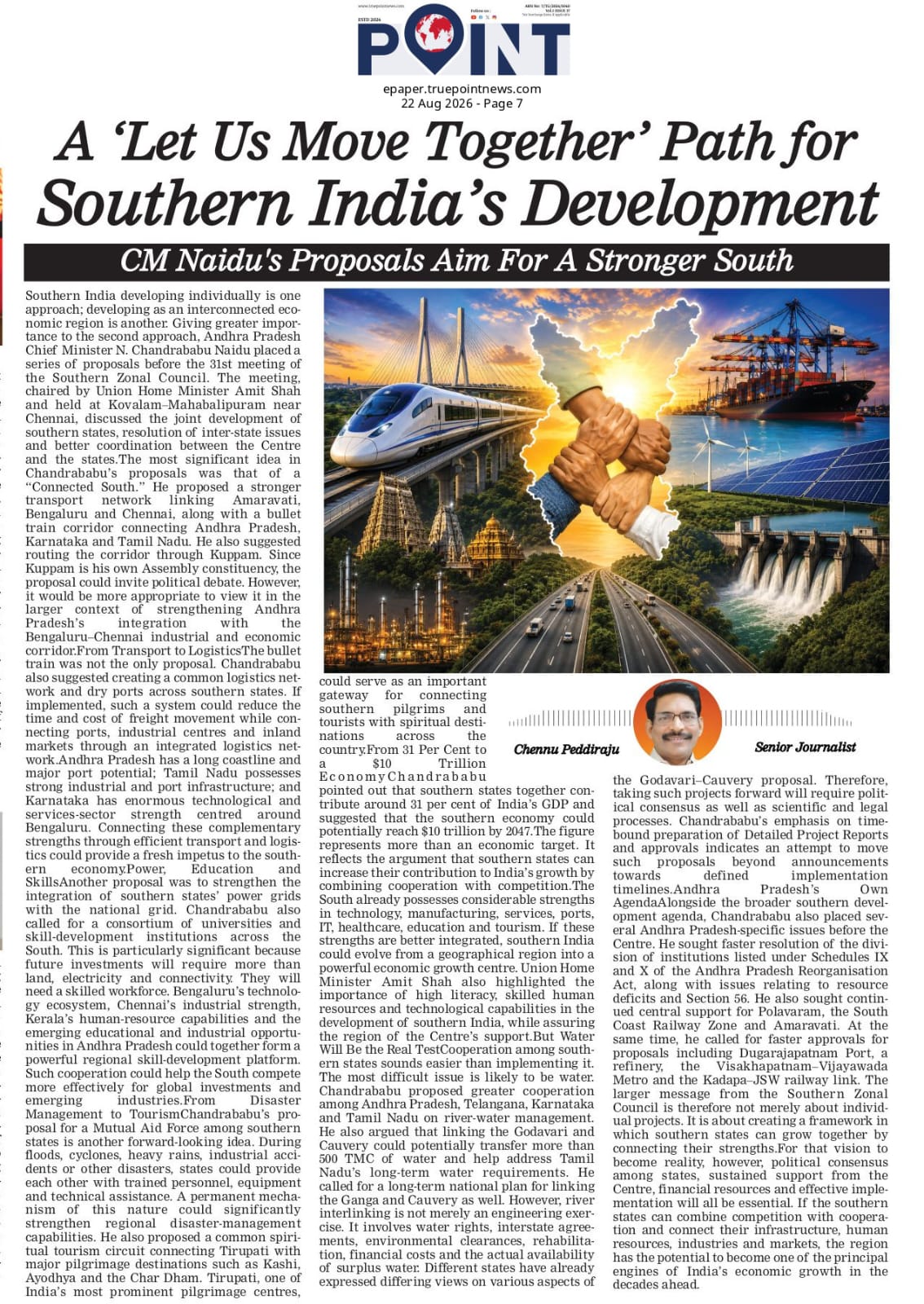
Let us move togather for Southern India Development Cm Naidus formula 22 August 2026
This newspaper article from 'True Point' details Andhra Pradesh Chief Minister N. Chandrababu Naidu's strategic proposals for a 'Connected South' at the 31st Southern Zonal Council meeting. Emphasizing regional collaboration, Naidu proposed high-speed transit linkages like a bullet train corridor connecting AP, Karnataka, and Tamil Nadu, integrated logistics, power grids, and shared educational and disaster management frameworks. Aiming to elevate the joint southern economy to $10 trillion by 2047, the proposals navigate intricate challenges like interstate water sharing—specifically the Godavari-Cauvery linking. Alongside regional growth, Naidu advocated for critical Andhra Pradesh-centric infrastructure approvals, presenting a unified vision of combined cooperation and competition to drive India's future economic momentum.
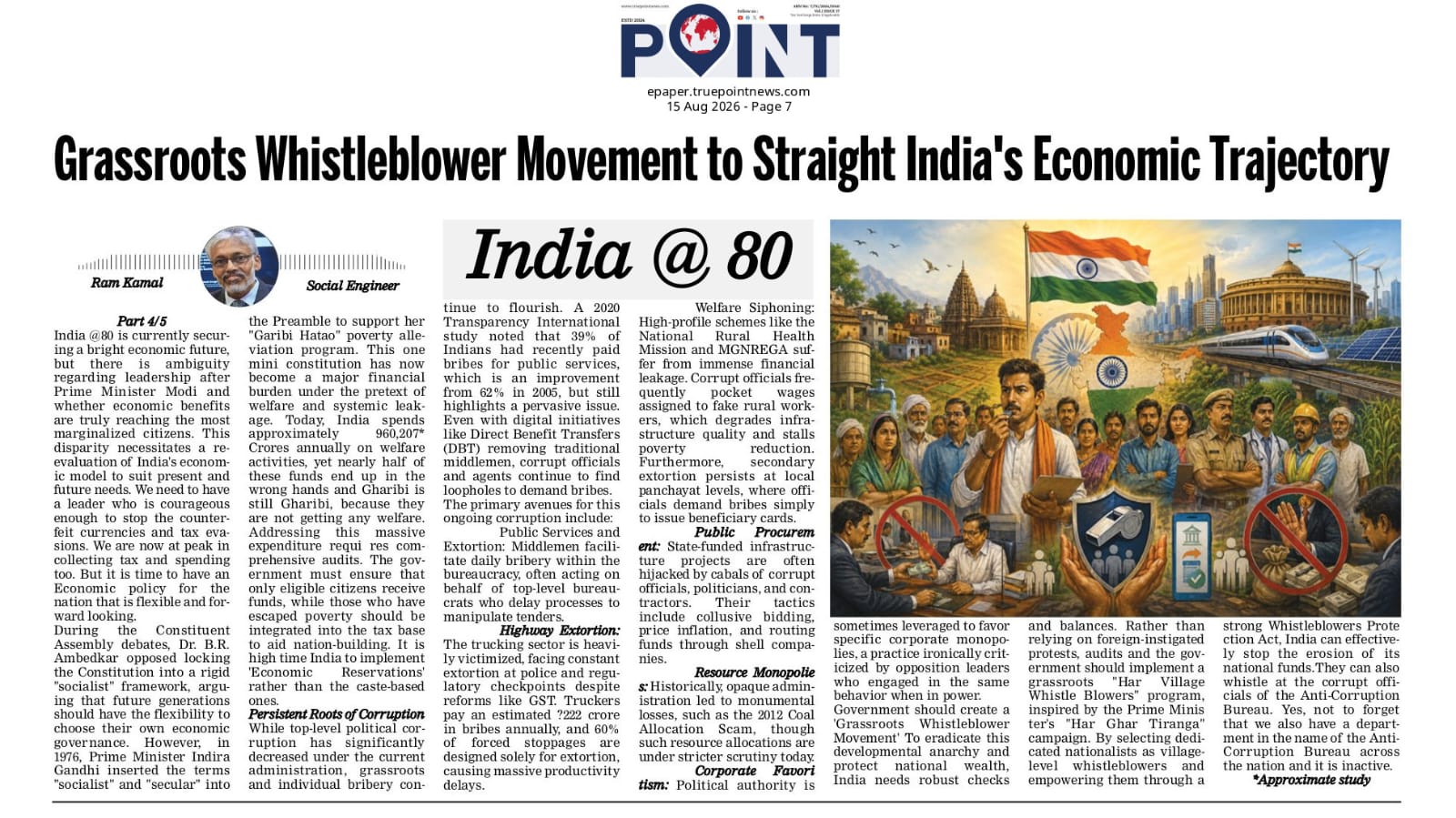
Grassroots whistleblower Movement to straight India Economic Trajectory 15 Aug 2026
This opinion piece from *The Point* newspaper, titled "Grassroots Whistleblower Movement to Straight India's Economic Trajectory," explores structural economic changes needed as India approaches its 80th year of independence. Author Ram Kamal, a "Social Engineer," argues that the introduction of rigid welfare concepts has fostered massive systemic leakages. Despite decreased top-level political corruption, grassroots bribery, highway extortion, and welfare siphoning persist. To counter this, Kamal proposes a decentralized "Har Village Whistle Blowers" initiative modeled on the "Har Ghar Tiranga" campaign. This movement aims to empower local nationalists under a strong Whistleblowers Protection Act to safeguard public funds and bypass inactive anti-corruption agencies. The article is accompanied by an illustration celebrating India's infrastructure, clean energy progress, and diverse citizens.
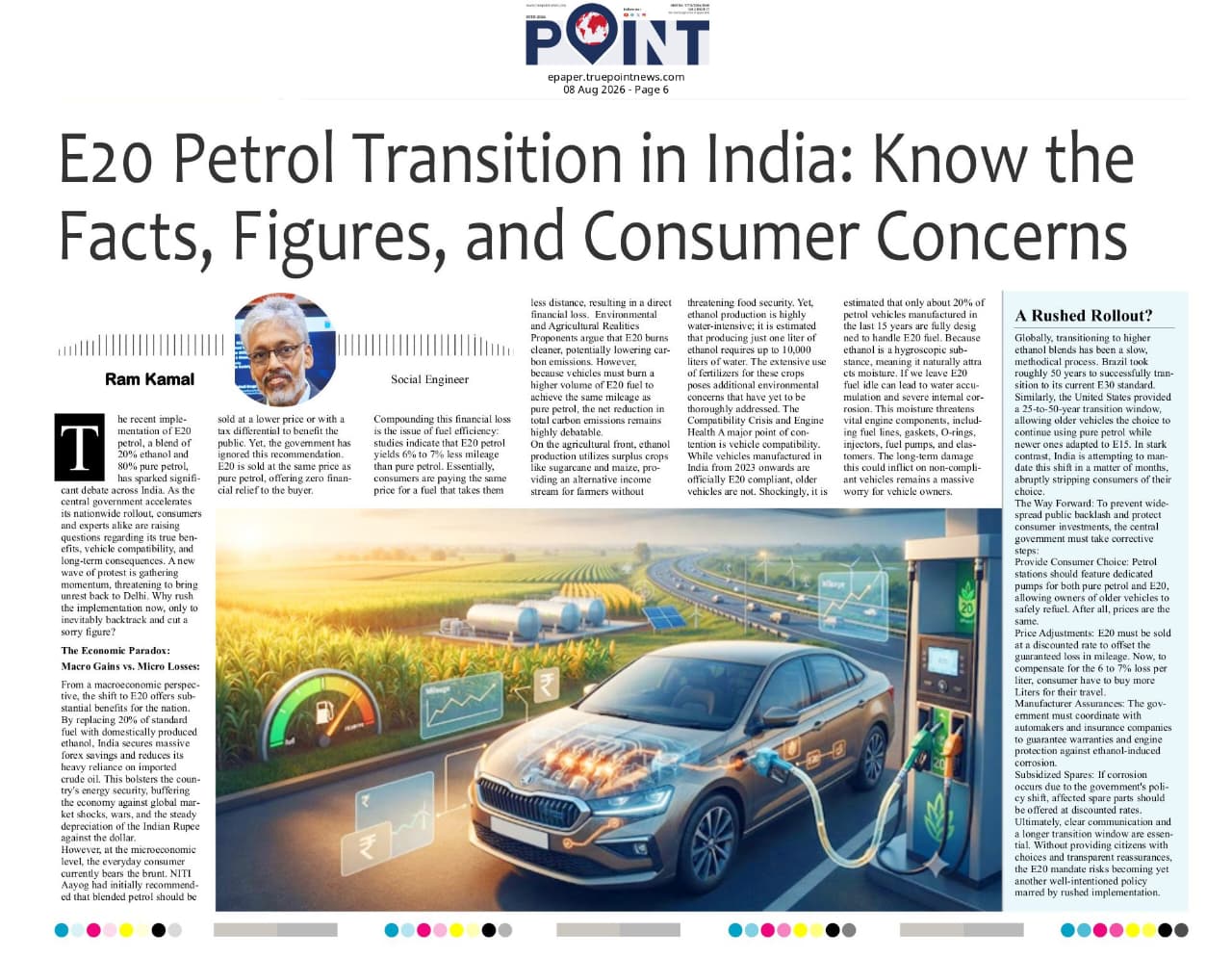
E20 Petrol Transition in India Know the facts 08 August 2026
This editorial article from 'POINT' explores India's rapid shift to E20 petrol, a blend of 20% ethanol and 80% pure petrol. Written by Social Engineer Ram Kamal, it highlights the economic paradox of the policy: while the nation gains from macroeconomic forex savings and energy security, individual consumers suffer due to 6% to 7% lower fuel mileage with no offsetting price discounts. Additionally, the piece raises serious environmental concerns regarding the massive water footprint of ethanol production and details the severe compatibility risks of E20 fuel for older, non-compliant vehicles. The author calls for dedicated fuel choice pumps, adjusted pricing, manufacturer engine warranties, and subsidized spare parts to prevent widespread backlash.
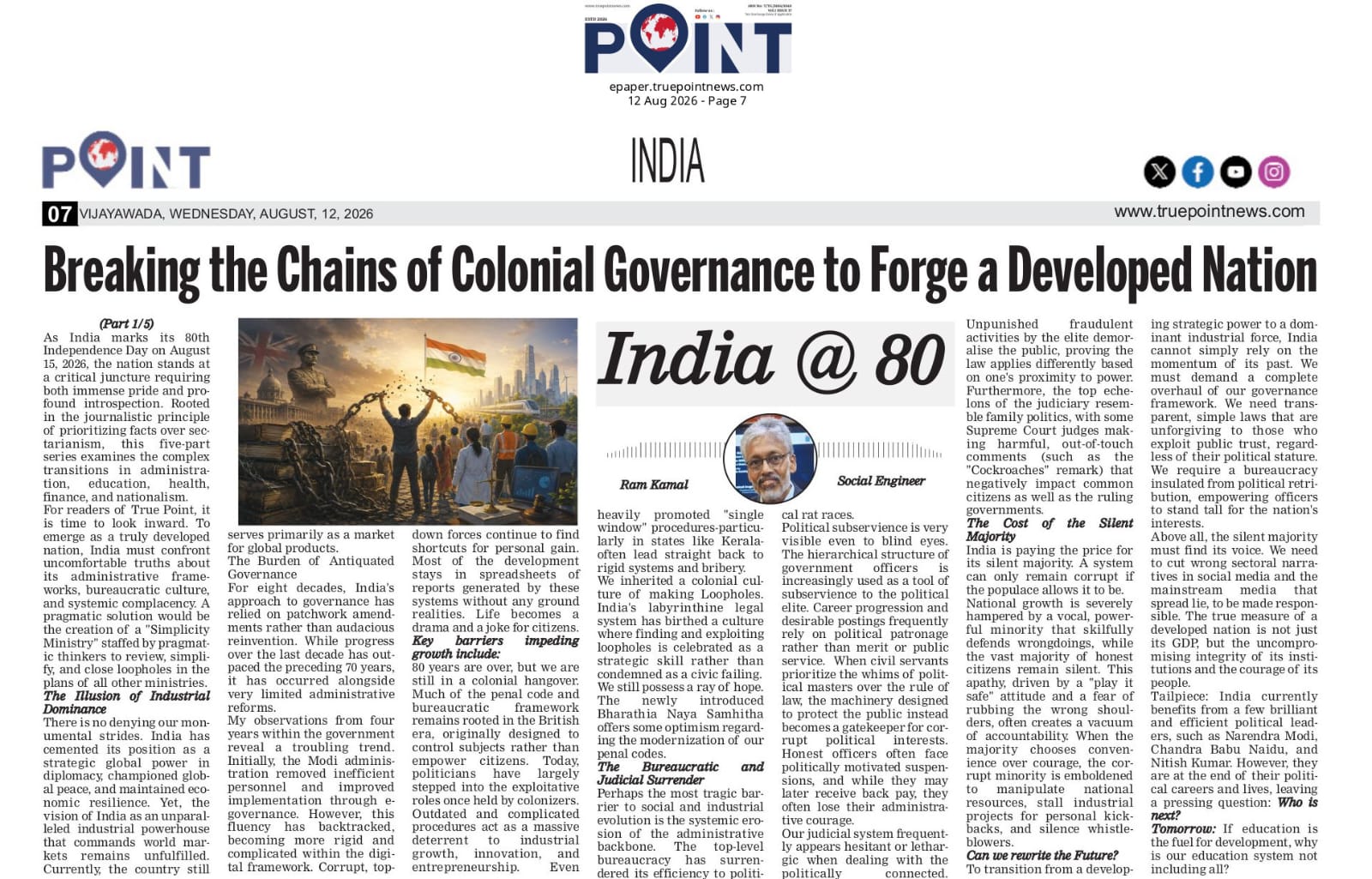
Breaking the chains of Colonial Governence 12 Aug 2026
This newspaper article from the "POINT" publication, dated August 12, 2026, marks the beginning of a five-part series titled "India @ 80" written by Social Engineer Ram Kamal. Reflecting on India's upcoming 80th Independence Day, the author argues that the nation remains burdened by a "colonial hangover," with archaic administrative structures, systemic political subservience in the bureaucracy, and judicial hesitancy when dealing with the elite. Critiquing the "silent majority" for enabling corruption through apathy, Kamal advocates for a comprehensive overhaul of India's governance framework, the simplification of laws, and a collective push for institutional integrity to help the country transition from a developing strategic power to a dominant, transparent industrial force.
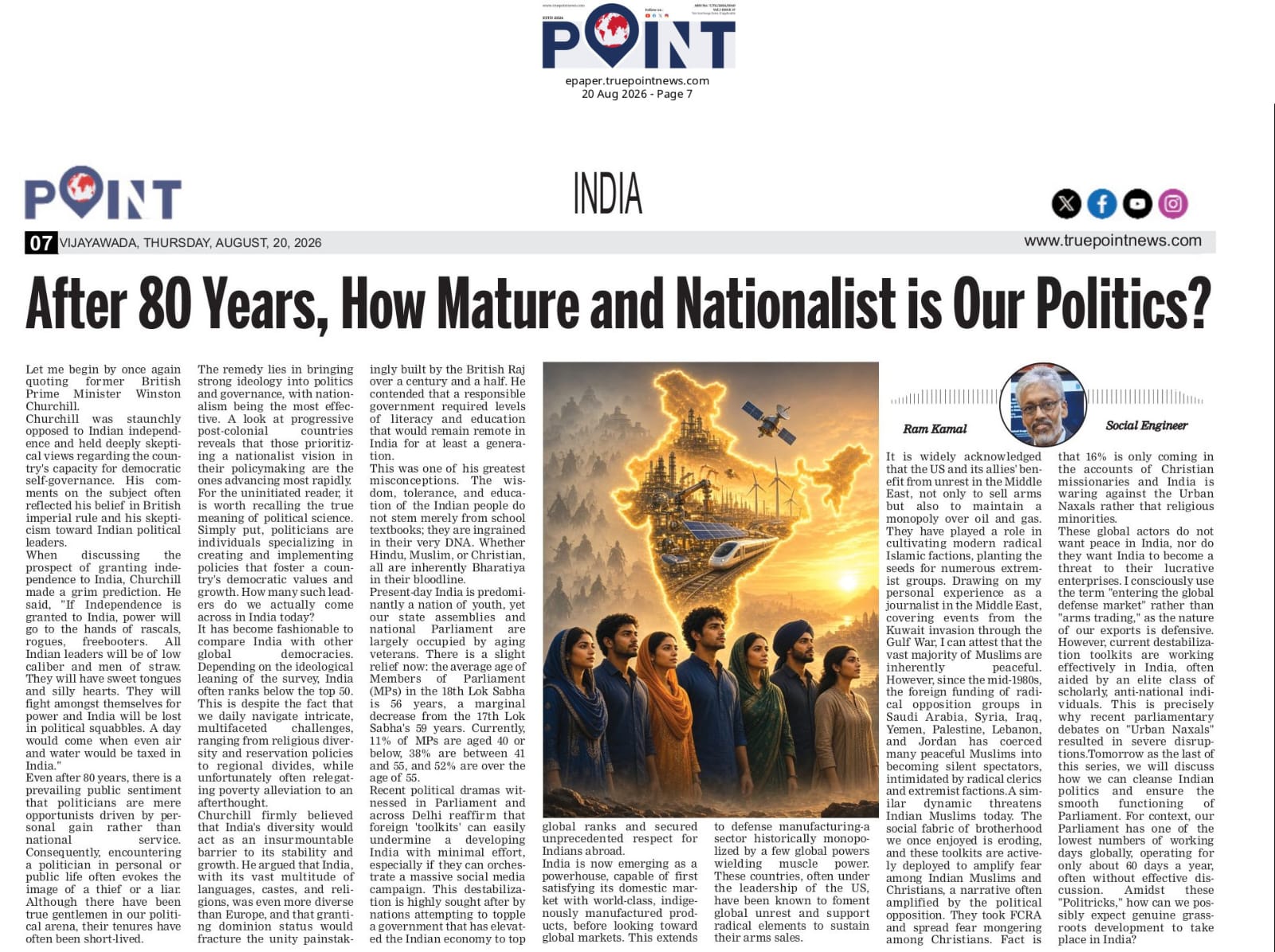
After 80 years how mature and nationalist is our politics 20 August 2026
This image features an opinion piece from the publication POINT, titled "After 80 Years, How Mature and Nationalist is Our Politics?" by Ram Kamal. The article critiques the status of modern Indian politics against Winston Churchill's pessimistic, colonial-era predictions about India's self-governance. While acknowledging public distrust of politicians, Kamal argues that India's inherent multicultural wisdom and a rising youth demographic are major strengths. He warns, however, that foreign-backed digital "toolkits" and local "Urban Naxals" seek to destabilize India's growing economic and defensive sovereignty. The central illustration depicts young citizens gazing up at a modern military drone, symbolizing technological progress and defense independence.