Words, Visuals, and the World Between Them

Social Engineering, Digital Transformation, and Inclusive Education Catalyst.

In 'The World That Can Be Healed and Prosper,' Ram Kamal examines the stark paradox of 2026, where unprecedented scientific, agricultural, and technological advancements coexist with escalating global conflict and political instability. Despite possessing the tools to eradicate famine and disease, humanity remains crippled by stubborn leadership, religious extremism, and a devastating 'War Economy' that exploits the most vulnerable as political currency. Confronting the tragic realities of warfare—particularly the psychological and physical exploitation of children—Kamal calls for a crucial shift away from failed international bureaucracies toward decentralized peace, the protection of young minds, and an economy rooted in innovation rather than destruction. Ultimately, the article serves as an urgent appeal to choose collective human survival over the destructive egos of the present.
4 min read Read Post
Ram Kamal Blog

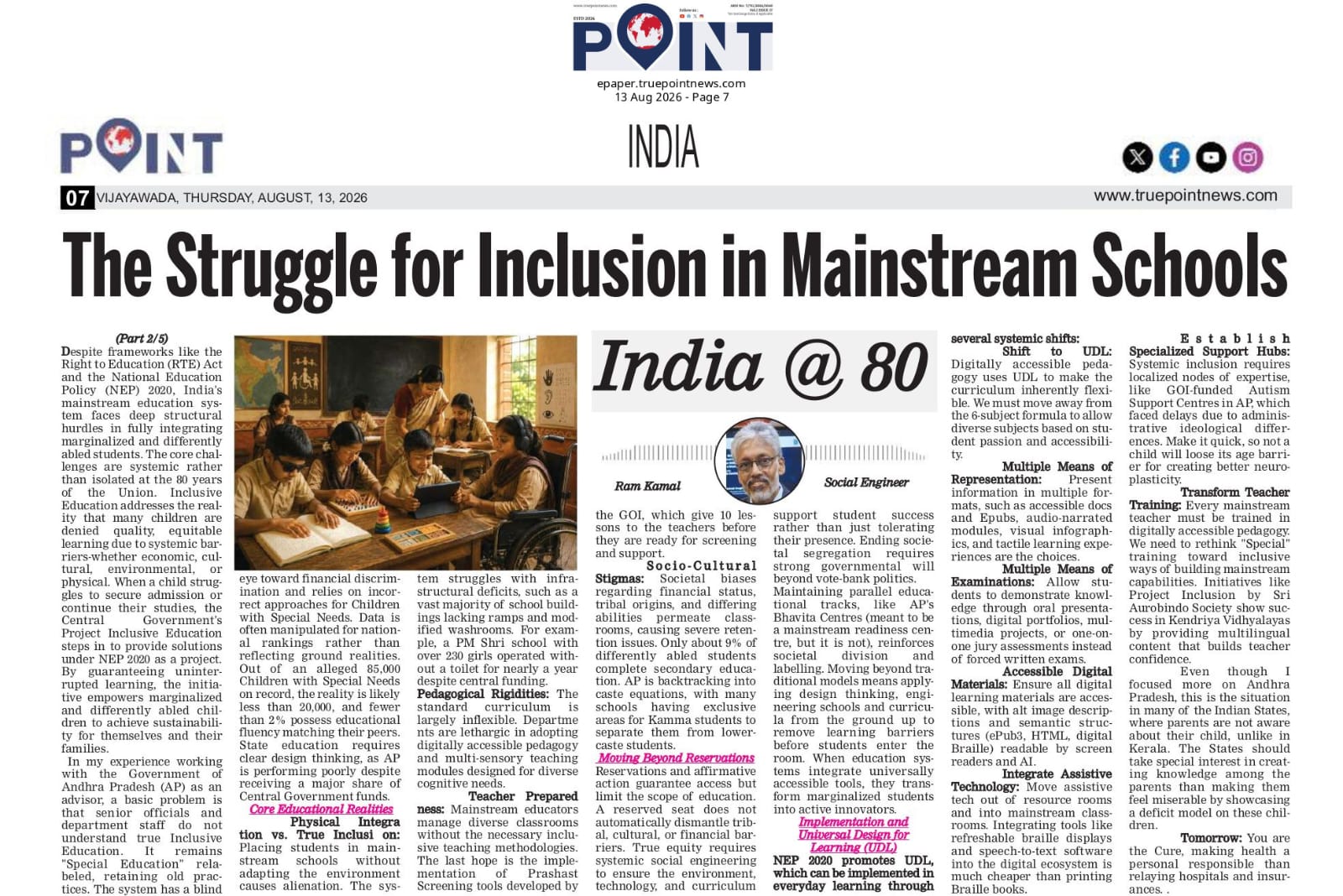
This newspaper article from 'POINT', written by social engineer Ram Kamal, discusses the critical challenges of executing inclusive education in Indian schools under the NEP 2020 framework. Kamal argues that physical integration without infrastructure adaptations and flexible, digitally-accessible curricula alienates differently-abled and marginalized students. Critiquing systemic administrative failures, particularly in Andhra Pradesh, the piece calls for a shift toward Universal Design for Learning (UDL), which incorporates accessible digital materials and assistive tech, while urging a transformation in teacher training and the dismantling of sociocultural stigmas.

5 min read Read Post
Ram Kamal Blog

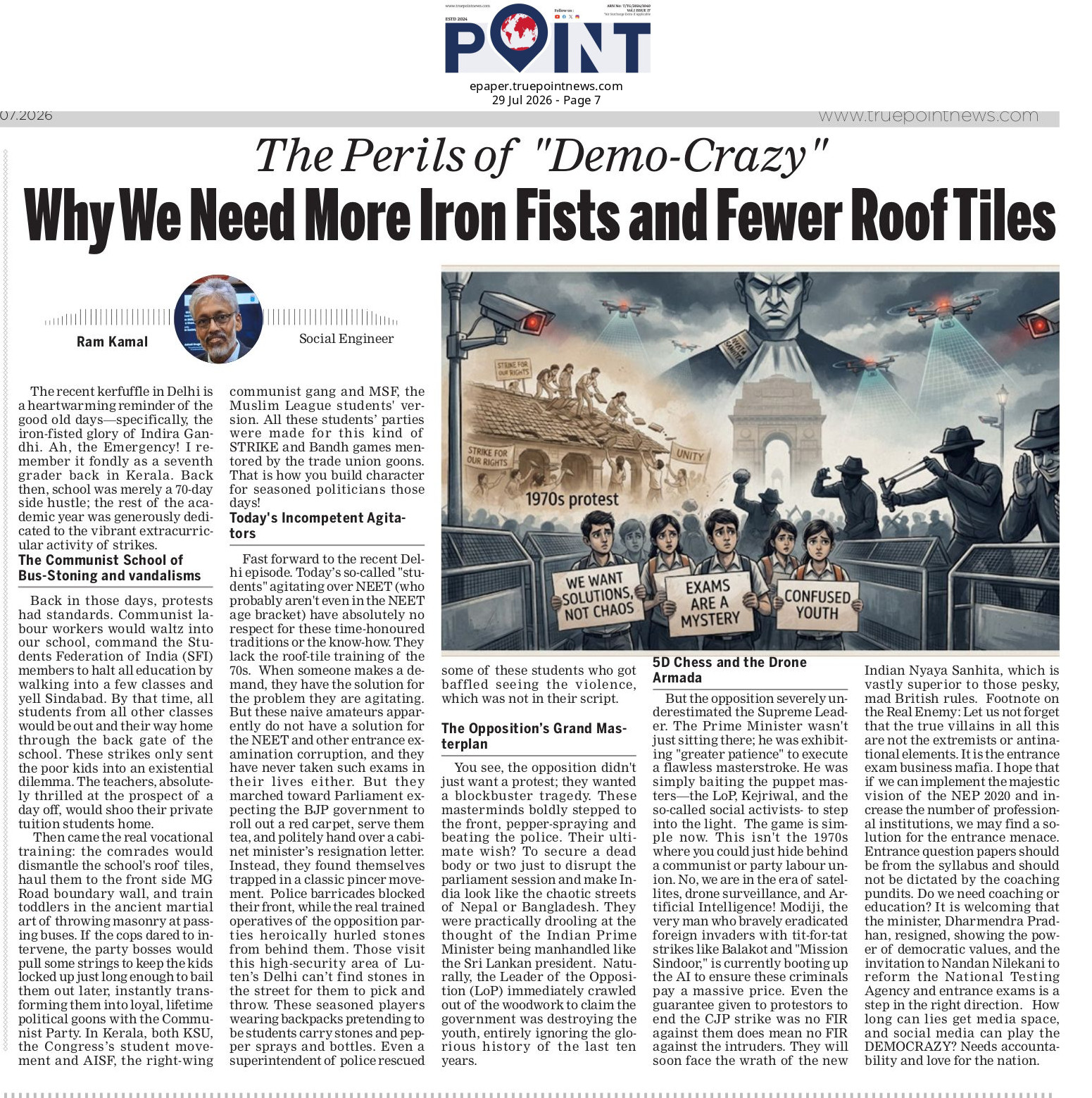
This image features an opinion piece from the e-paper "POINT," written by Social Engineer Ram Kamal. Titled 'The Perils of "Demo-Crazy"', the article satirically compares the systematic, student-led protests of the 1970s to modern-day demonstrations, which the author describes as disorganized and easily manipulated by opposition politicians. A prominent illustration juxtaposes chaotic black-and-white 1970s strikes overseen by Indira Gandhi against modern, color-depicted student protests monitored by high-tech police, drones, and AI under Narendra Modi. The article critiques contemporary agitations, accusing opposition parties of orchestrating unrest, while praising the current administration's control measures.

6 min read Read Post
Ram Kamal Blog

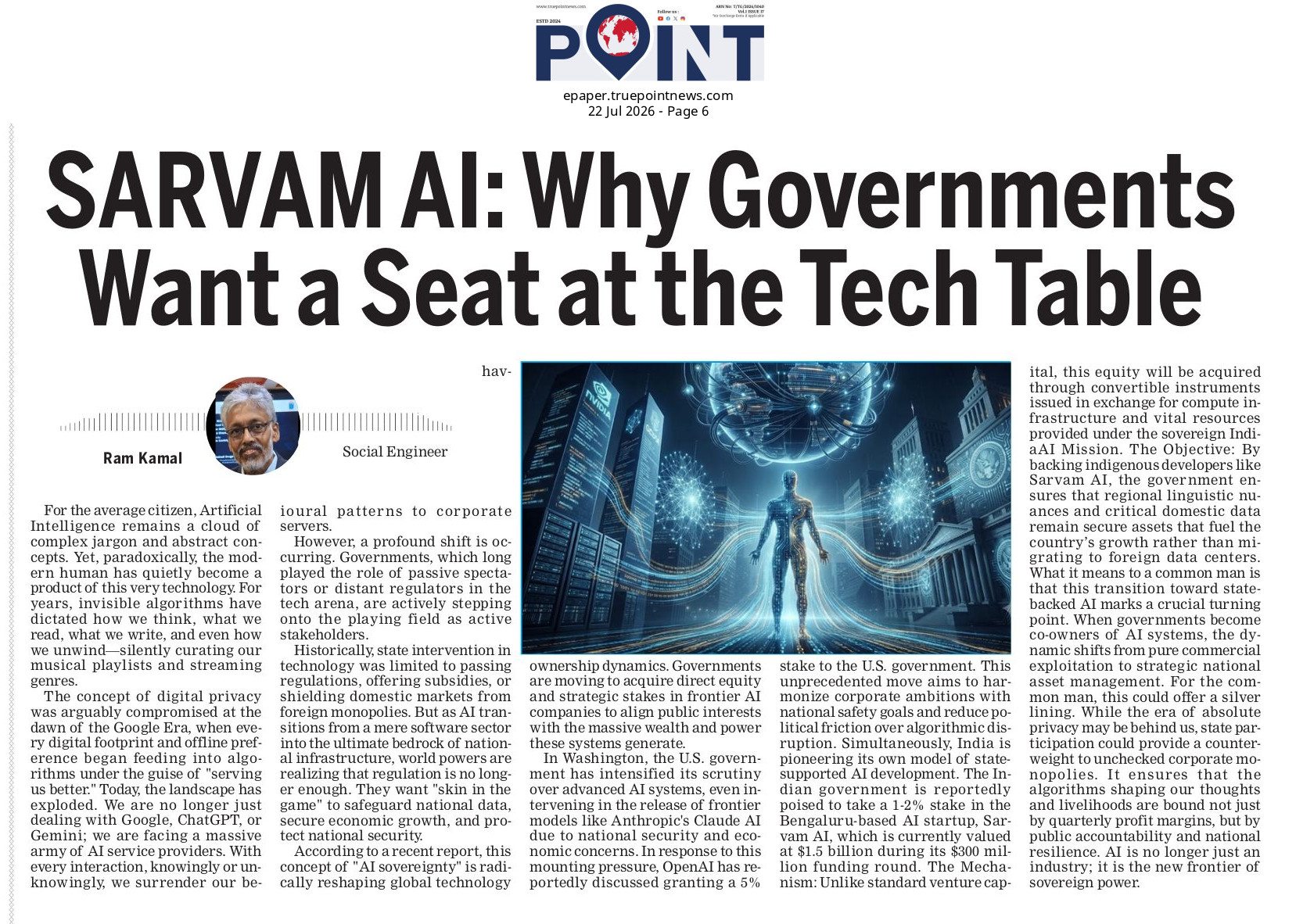
This newspaper article from POINT (July 22, 2026) discusses the rising global phenomenon of "AI sovereignty," where national governments are transitioning from mere regulatory overseers to active stakeholders in Artificial Intelligence companies. Highlighting efforts in both the U.S. (negotiating stakes in OpenAI) and India (acquiring equity in Bengaluru-based Sarvam AI), the author argues that government-backed equity helps protect national security, preserves local linguistic nuances, and prevents essential domestic data from migrating abroad. Moving from passive regulation to active asset ownership is framed as a strategic necessity to counter corporate monopolies and ensure algorithmic development remains accountable to public interests rather than solely corporate margins.

4 min read Read Post
Ram Kamal Blog

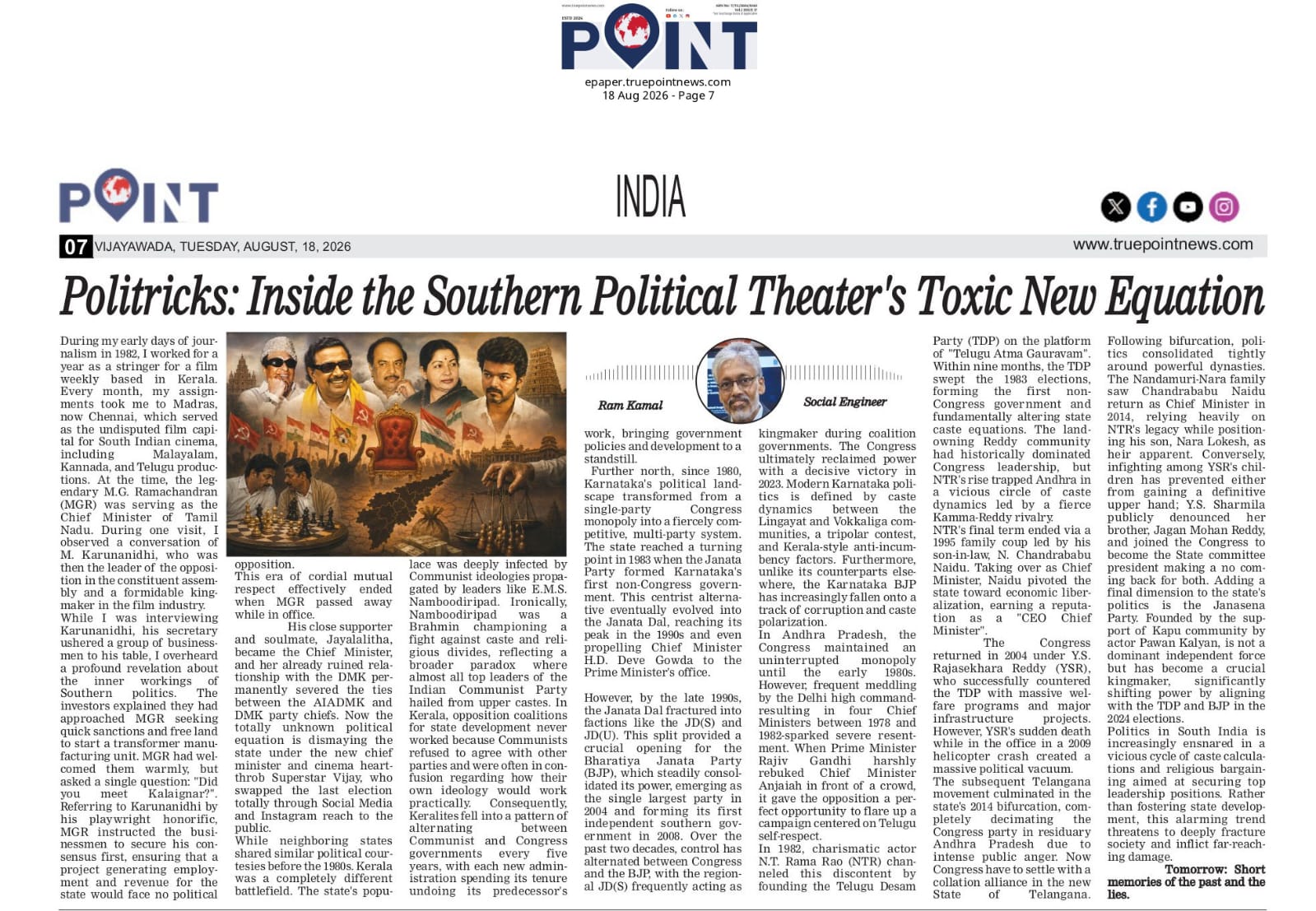
This editorial article from 'POINT' newspaper analyzes the shifting, increasingly complex political dynamics across South India, focusing on Tamil Nadu, Kerala, Karnataka, Andhra Pradesh, and Telangana. Tracing historical trajectories from the early 1980s to the present, the authors illustrate how early eras of mutual respect—such as between MGR and Karunanidhi in Tamil Nadu—have given way to modern social-media campaigns, intense dynastic consolidation, and polarising caste alignments. Highlighting the institutional stalemates in Kerala, tripolar caste-driven contests in Karnataka, and the disruptive post-bifurcation dynastic rivalries in Andhra Pradesh and Telangana, the article concludes that southern politics has become dangerously ensnared in a cycle of caste calculations and power-brokering, threatening regional societal stability and development.

6 min read Read Post
Ram Kamal Blog

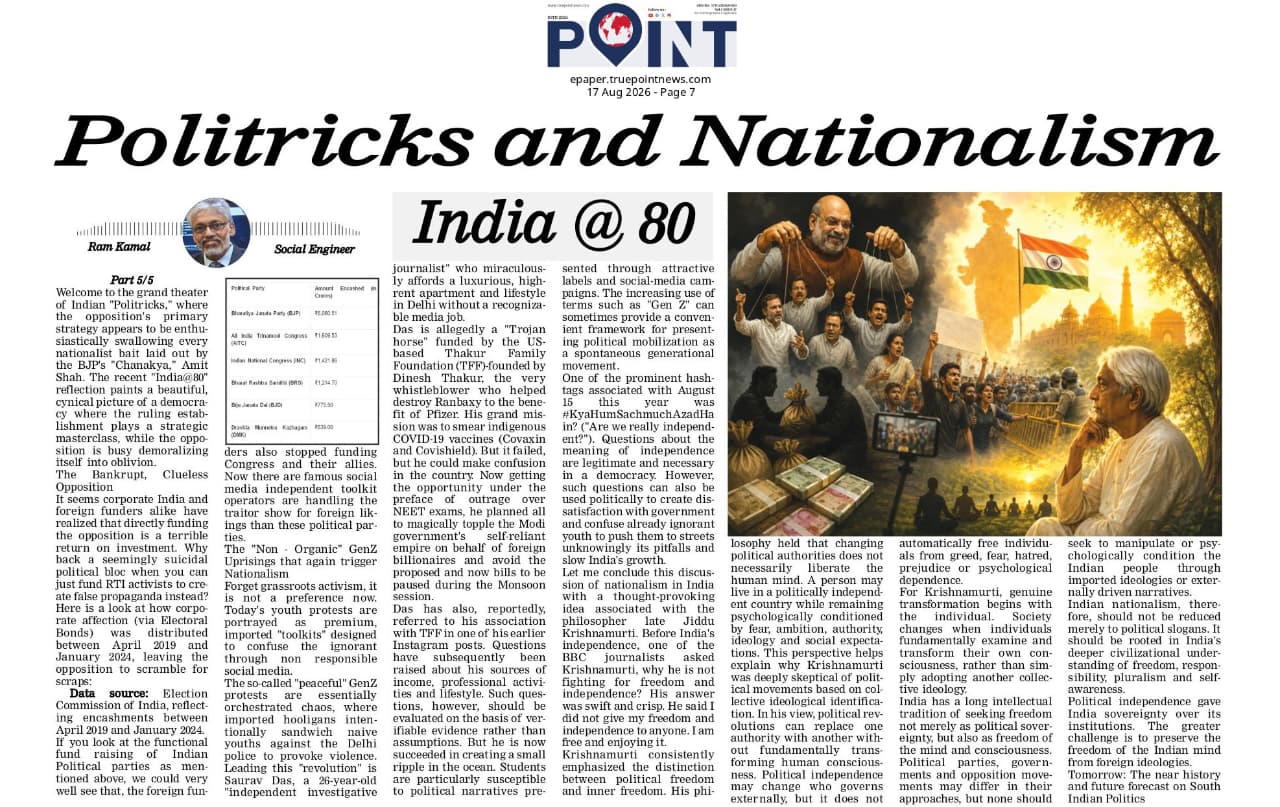
This editorial article, titled "Politricks and Nationalism: India @ 80" from Point news, critiques the contemporary political landscape in India. It argues that the political opposition has been left underfunded, as evidenced by a table detailing Electoral Bond encashments heavily favoring the ruling BJP. The writer alleges that instead of organic protests, foreign interests and funded "toolkit" operators—specifically mentioning investigative journalist Saurav Das and the US-based Thakur Family Foundation—are orchestrating "Gen Z" uprisings to disrupt India's progress. Concluding with the philosophical insights of Jiddu Krishnamurti, the article stresses that true national independence lies in civilizational self-awareness and inner intellectual freedom rather than merely changing external political authorities.

6 min read Read Post
Ram Kamal Blog

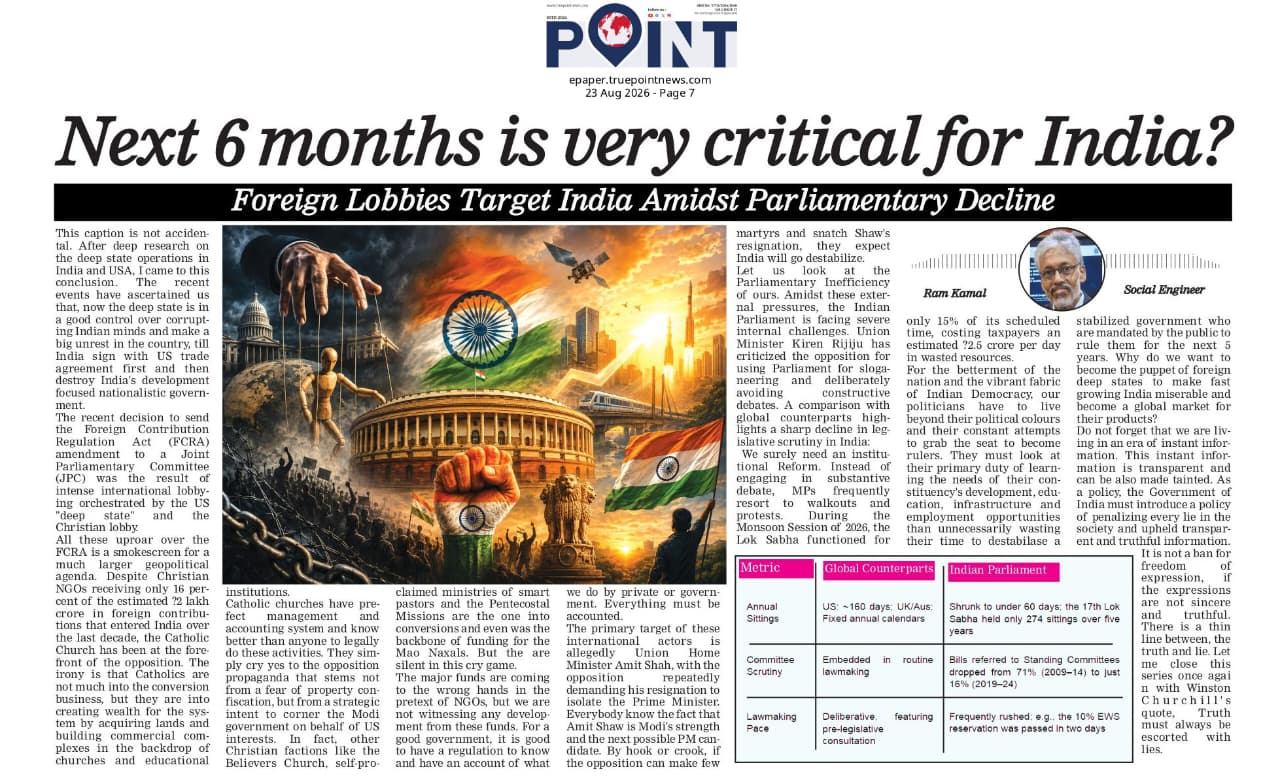
This editorial article from 'POINT' argues that India faces an imminent threat from foreign 'deep state' lobbies and local interests attempting to destabilize its nationalistic government over the next six months. Written by social engineer Ram Kamal, the piece alleges that international opposition to the Foreign Contribution Regulation Act (FCRA) is a geopolitical front organized by US lobbies and church groups. It also highlights internal governance concerns, pointing to a severe decline in the productivity and legislative scrutiny of the Indian Parliament, as detailed in a comparative table showing decreased annual sittings, reduced committee scrutiny, and rushed lawmaking processes compared to global counterparts.

5 min read Read Post
Ram Kamal Blog

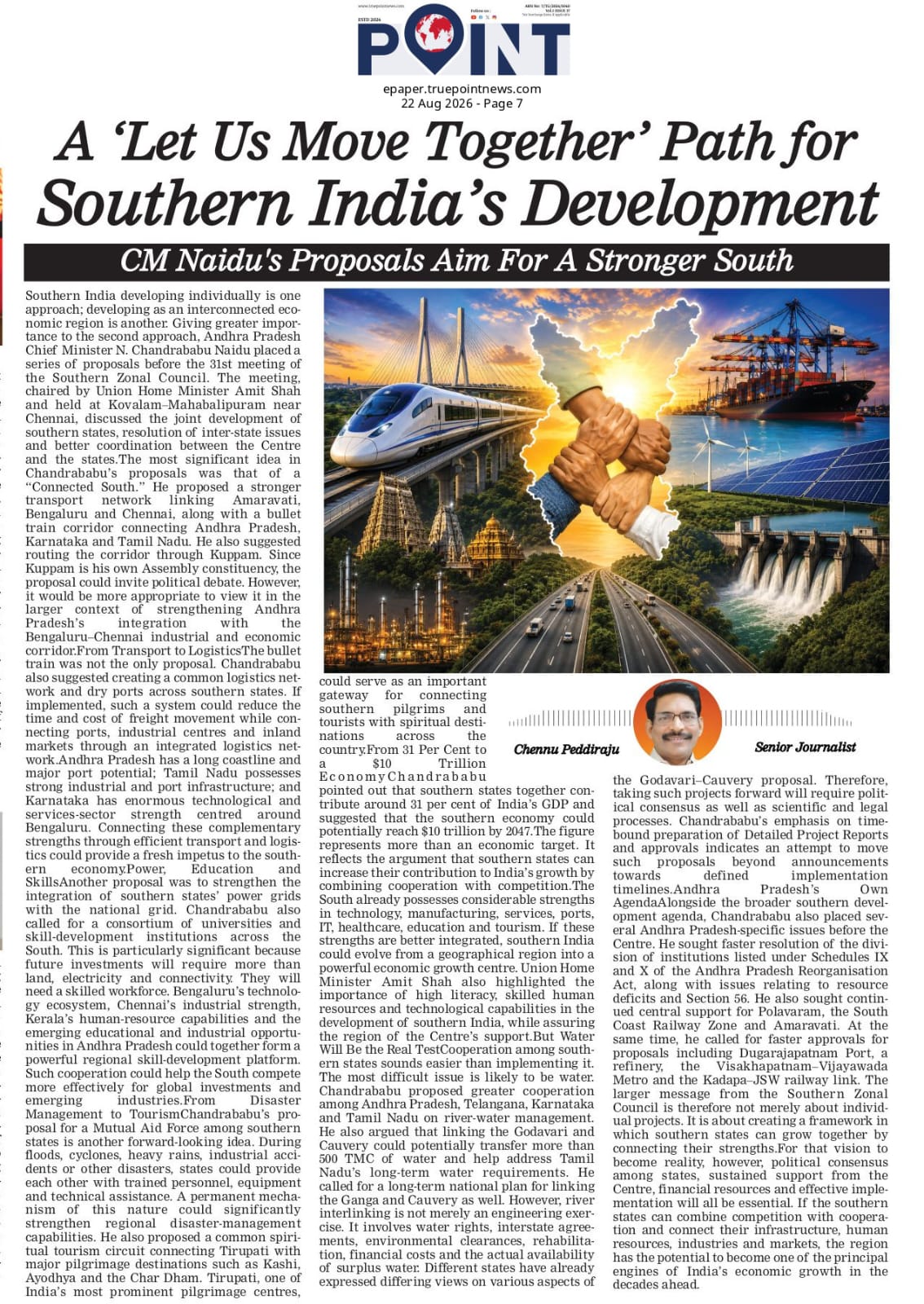
This newspaper article from 'True Point' details Andhra Pradesh Chief Minister N. Chandrababu Naidu's strategic proposals for a 'Connected South' at the 31st Southern Zonal Council meeting. Emphasizing regional collaboration, Naidu proposed high-speed transit linkages like a bullet train corridor connecting AP, Karnataka, and Tamil Nadu, integrated logistics, power grids, and shared educational and disaster management frameworks. Aiming to elevate the joint southern economy to $10 trillion by 2047, the proposals navigate intricate challenges like interstate water sharing—specifically the Godavari-Cauvery linking. Alongside regional growth, Naidu advocated for critical Andhra Pradesh-centric infrastructure approvals, presenting a unified vision of combined cooperation and competition to drive India's future economic momentum.

5 min read Read Post
Ram Kamal Blog

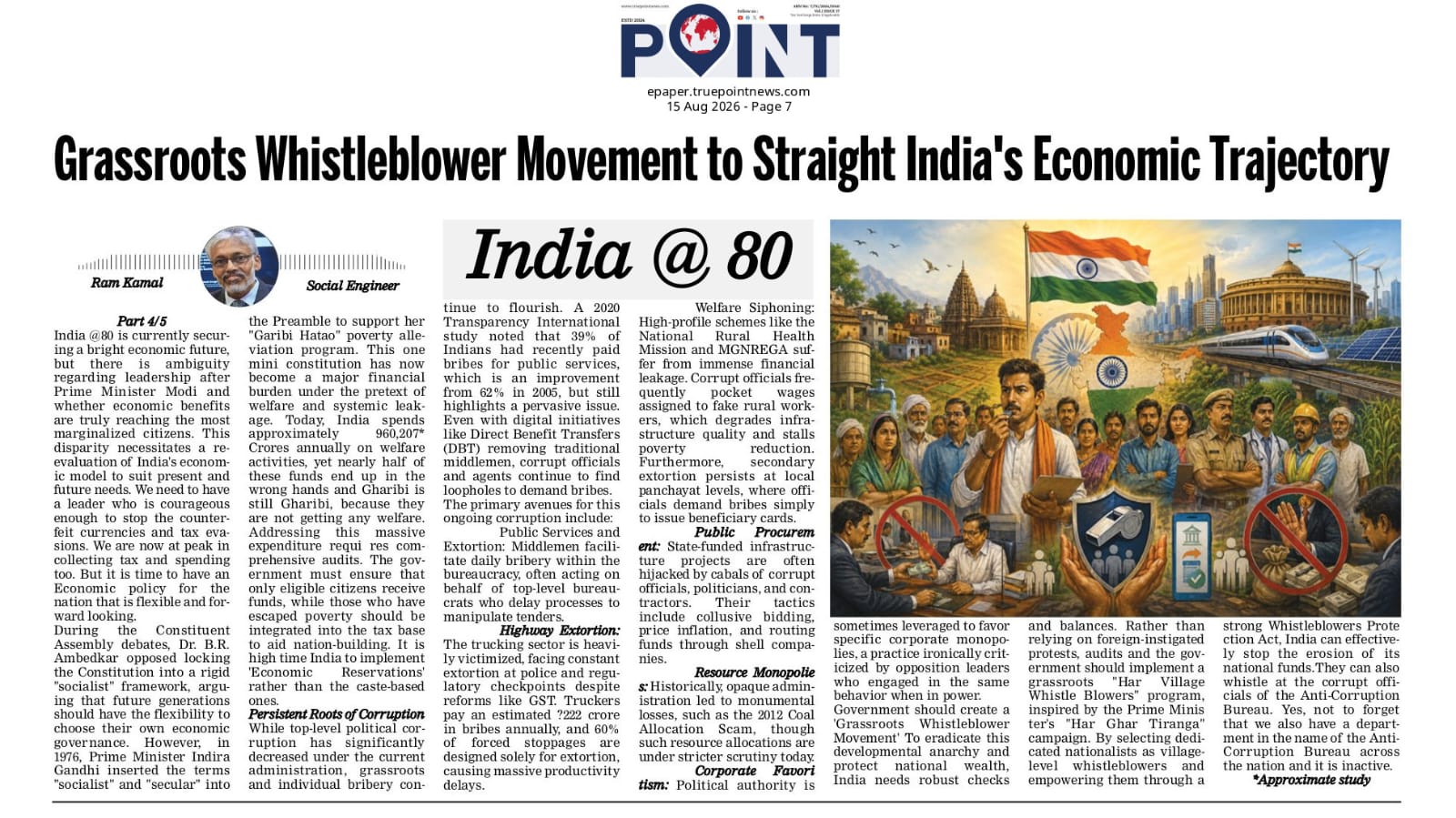
This opinion piece from *The Point* newspaper, titled "Grassroots Whistleblower Movement to Straight India's Economic Trajectory," explores structural economic changes needed as India approaches its 80th year of independence. Author Ram Kamal, a "Social Engineer," argues that the introduction of rigid welfare concepts has fostered massive systemic leakages. Despite decreased top-level political corruption, grassroots bribery, highway extortion, and welfare siphoning persist. To counter this, Kamal proposes a decentralized "Har Village Whistle Blowers" initiative modeled on the "Har Ghar Tiranga" campaign. This movement aims to empower local nationalists under a strong Whistleblowers Protection Act to safeguard public funds and bypass inactive anti-corruption agencies. The article is accompanied by an illustration celebrating India's infrastructure, clean energy progress, and diverse citizens.

4 min read Read Post
Ram Kamal Blog

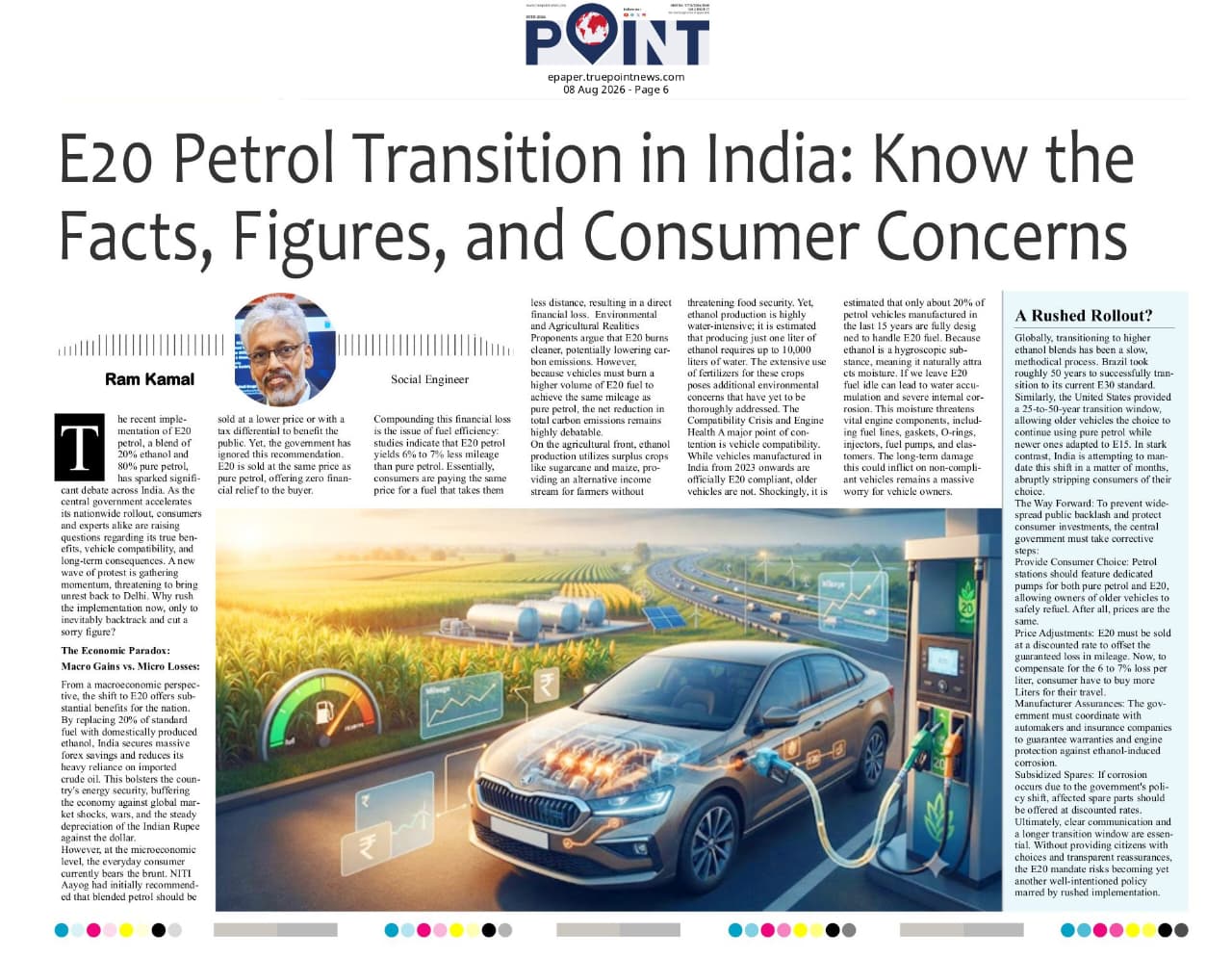
This editorial article from 'POINT' explores India's rapid shift to E20 petrol, a blend of 20% ethanol and 80% pure petrol. Written by Social Engineer Ram Kamal, it highlights the economic paradox of the policy: while the nation gains from macroeconomic forex savings and energy security, individual consumers suffer due to 6% to 7% lower fuel mileage with no offsetting price discounts. Additionally, the piece raises serious environmental concerns regarding the massive water footprint of ethanol production and details the severe compatibility risks of E20 fuel for older, non-compliant vehicles. The author calls for dedicated fuel choice pumps, adjusted pricing, manufacturer engine warranties, and subsidized spare parts to prevent widespread backlash.

4 min read Read Post
Ram Kamal Blog

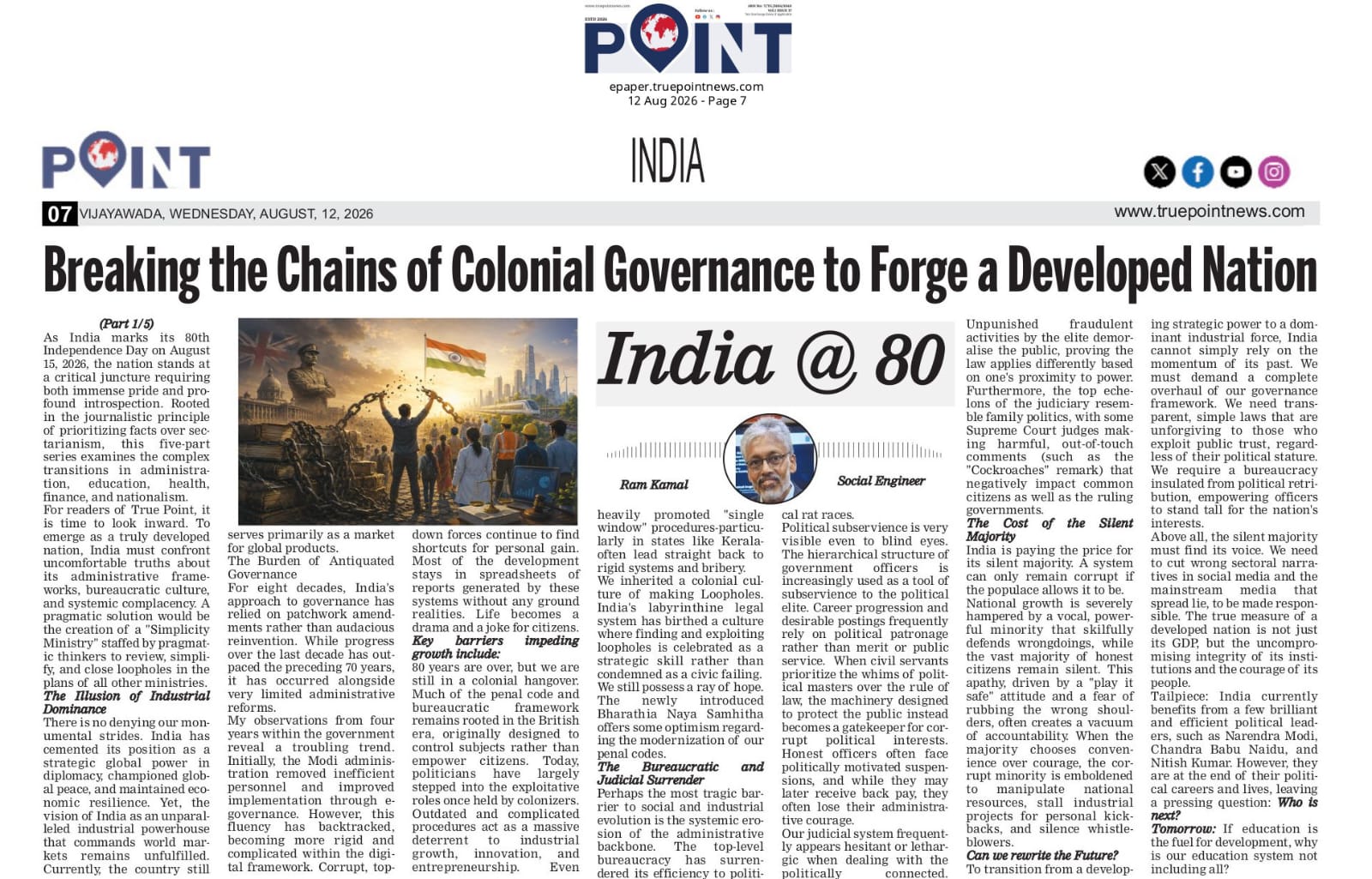
This newspaper article from the "POINT" publication, dated August 12, 2026, marks the beginning of a five-part series titled "India @ 80" written by Social Engineer Ram Kamal. Reflecting on India's upcoming 80th Independence Day, the author argues that the nation remains burdened by a "colonial hangover," with archaic administrative structures, systemic political subservience in the bureaucracy, and judicial hesitancy when dealing with the elite. Critiquing the "silent majority" for enabling corruption through apathy, Kamal advocates for a comprehensive overhaul of India's governance framework, the simplification of laws, and a collective push for institutional integrity to help the country transition from a developing strategic power to a dominant, transparent industrial force.

5 min read Read Post
Ram Kamal Blog

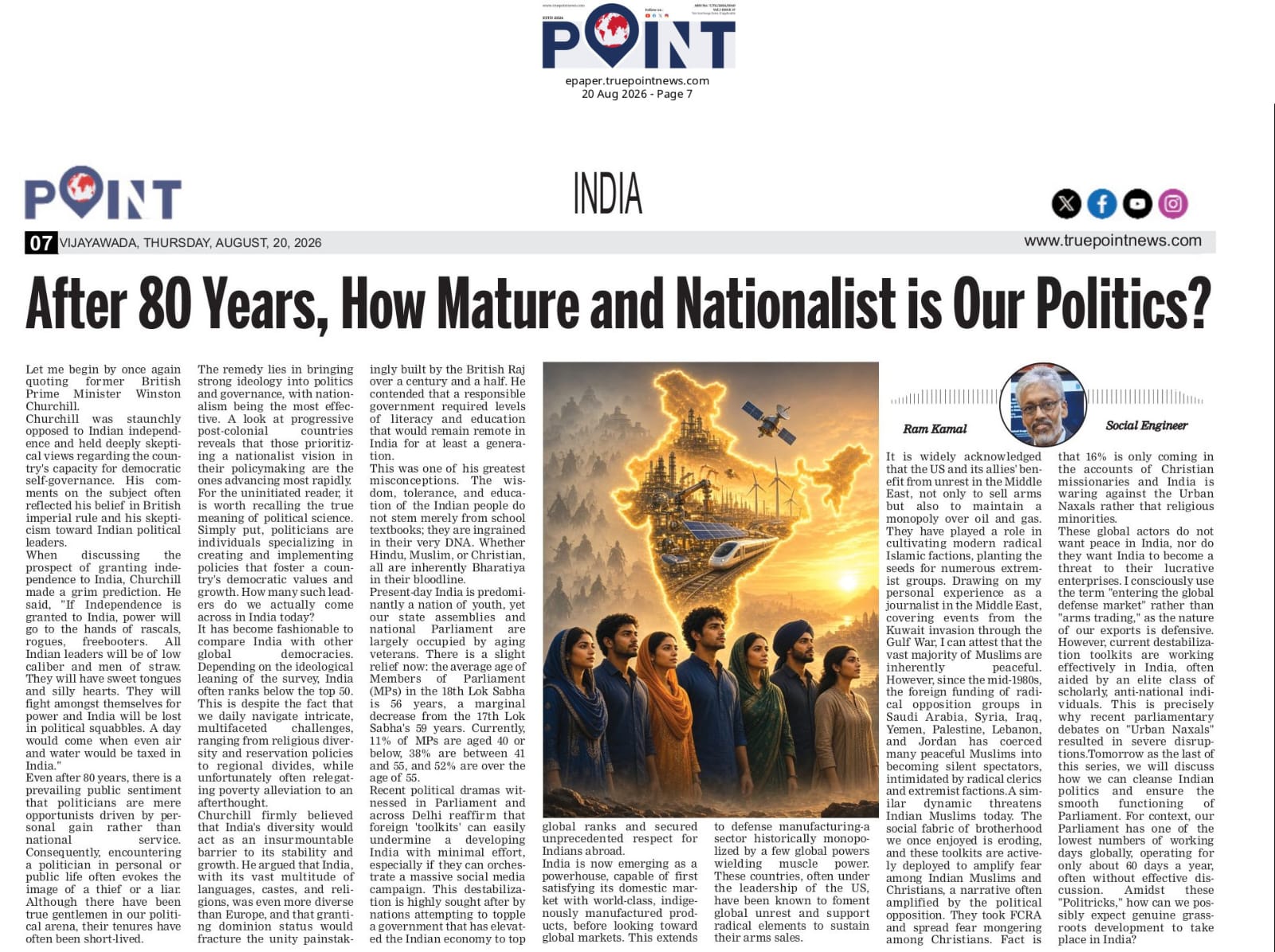
This image features an opinion piece from the publication POINT, titled "After 80 Years, How Mature and Nationalist is Our Politics?" by Ram Kamal. The article critiques the status of modern Indian politics against Winston Churchill's pessimistic, colonial-era predictions about India's self-governance. While acknowledging public distrust of politicians, Kamal argues that India's inherent multicultural wisdom and a rising youth demographic are major strengths. He warns, however, that foreign-backed digital "toolkits" and local "Urban Naxals" seek to destabilize India's growing economic and defensive sovereignty. The central illustration depicts young citizens gazing up at a modern military drone, symbolizing technological progress and defense independence.

6 min read Read Post